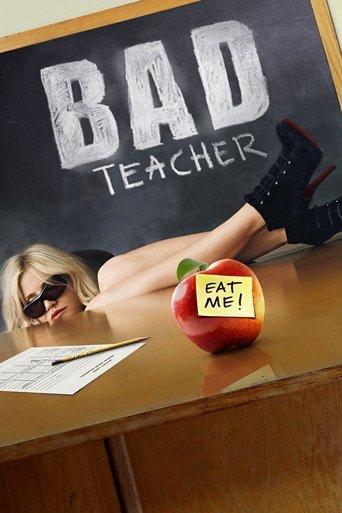
Bad Teacher
2011
The sourced concerns are substantially offset by delivered value.
What counts as a cash grab?
Commercial extraction prioritized over meaningful consumer or creative value. Profit, popularity, adaptations, sequels, remakes, high budgets, and normal marketing do not count by themselves.
Why?
Bad Teacher (2011) was a mid‑budget studio comedy with an original screenplay by Lee Eisenberg and Gene Stupnitsky, directed by Jake Kasdan and starring Cameron Diaz and Justin Timberlake. Public reporting shows a roughly $20 million production budget, a wide theatrical release, and strong box office returns, and contemporary reviews describe it as a broadly commercial, raunchy comedy rather than a deliberately exploitative product. I found no credible reporting of predatory monetization, paywalls, rushed release practices, or large-scale reuse that would on its own support calling it a cash grab.
- No credible reporting found of predatory monetization, premium pricing, or exploitative DLC/VOD practices.
- Film credited to an original screenplay and received standard studio production and marketing.
- Box office and distribution were conventional, the film grossed substantially more than its $20M production budget.
View full breakdownHide full breakdown
- Contemporary reviews called it a commercial, raunchy comedy with mixed critical reception, not a rushed or deceptive release.
Score factors
| Direction | Factor | Evidence | Impact |
|---|---|---|---|
| Against | Original screenplay and credited production | The film is credited to an original screenplay by Lee Eisenberg and Gene Stupnitsky, directed by Jake Kasdan, with principal cast including Cameron Diaz and Justin Timberlake, indicating conventional creative investment.[4][1] | -14 |
| Against | Conventional commercial success | Box Office Mojo and industry trackers list a roughly $20 million production budget and large worldwide grosses, showing a conventional theatrical-commercial strategy rather than evidence of price/value mismatch or deceptive pricing.[2][3] | -11 |
| Against | Mixed critical reception, not proof of exploitation | Contemporary reviews characterized the film as a raunchy, broadly commercial comedy with mixed-to-negative critical response, which speaks to artistic reception but does not by itself indicate predatory commercial exploitation.[1][5] | -5 |
| For | Exploitative monetization absent | Contemporaneous distribution records and home‑video listings show normal theatrical release and standard home video distribution with no evidence of pay-per-feature exploitation or microtransaction schemes.[2][3] | +3 |
| For | No reporting of rushed or deceptive release | I found no credible reporting that the film was rushed into release, distributed deceptively, or issued with undisclosed content removal or bait-and-switch practices.[2][1] | +2 |
Confidence: High · Contemporary box office records, production credits, and major reviews provide direct, consistent evidence of a standard studio mid‑budget comedy and no reporting surfaced of predatory monetization or rushed/deceptive release, the remaining gaps are internal studio marketing spend and private contra · Researched 2026-09-29
Sources reviewed
- [1]www.rottentomatoes.com
- [2]www.boxofficemojo.com
- [3]www.the-numbers.com
- [4]en.wikipedia.org
- [5]www.latimes.com
- [6]www.boxofficemojo.com
- [7]www.imdb.com
- [8]www.rottentomatoes.com
- [9]catalog.afi.com
- [10]boxofficewatch.com
View 14 more sourcesShow fewer sources
What does the community think?
The AI sees low cash-grab risk. What's your read?
Loading community verdict…