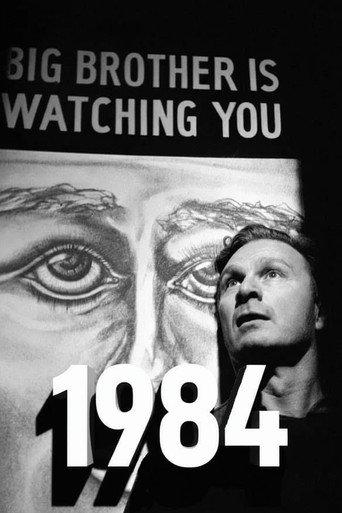
1984
1953
The sourced concerns are substantially offset by delivered value.
What counts as a cash grab?
Commercial extraction prioritized over meaningful consumer or creative value. Profit, popularity, adaptations, sequels, remakes, high budgets, and normal marketing do not count by themselves.
Why?
Studio One's 1984 is a one-hour television adaptation broadcast September 21, 1953 on CBS as the Season 6 premiere of the anthology series, written for television by William Templeton and starring Eddie Albert, Norma Crane and Lorne Greene. Contemporary press described the teleplay as ambitious and a masterly adaptation, and it is documented as the first TV adaptation of Orwell's novel. I found no credible contemporaneous or later sources alleging predatory monetization, deceptive release, or rushed low-effort reuse for this broadcast.
- Aired September 21, 1953 as a one-hour Studio One teleplay with credited writer and notable cast
- Contemporary coverage praised the production as ambitious and a masterly adaptation
- Documented as the first television adaptation of Orwell's novel, with writer William Templeton later involved in a 1956 film
View full breakdownHide full breakdown
- No credible sources located alleging predatory monetization, deceptive release, or evident low-effort reuse
Score factors
| Direction | Factor | Evidence | Impact |
|---|---|---|---|
| Against | Production and cast | The teleplay aired September 21, 1953 on CBS's Studio One and credits William Templeton as teleplay writer, with Eddie Albert, Norma Crane and Lorne Greene in major roles.[1][3] | -16 |
| Against | Contemporary critical reception | Contemporary outlets, including Life magazine and summaries of press coverage, described the Studio One presentation as an ambitious, masterly adaptation rather than a perfunctory or cheap production.[2] | -15 |
| Against | First television adaptation and adaptation effort | This Studio One broadcast is documented as the first television adaptation of Orwell's Nineteen Eighty-Four, and William Templeton later co-wrote the 1956 film version, indicating substantive adaptation work.[1][4] | -12 |
| For | No evidence of exploitative monetization | Search of contemporary press coverage and later reference sources turned up no credible allegations of predatory monetization, deceptive release tactics, or commercial exploitation tied to this 1953 Studio One broadcast.[1][2] | +8 |
| Against | Broadcast anthology context and audience framing | The production was presented as a network anthology event on Studio One, and contemporary reporting framed it as an ambitious, high-profile television project rather than as a low-cost filler or franchise exploitation.[1] | -8 |
Confidence: High · Multiple contemporaneous sources and program records document production details and positive critical reception, and searches of major archives and summaries produced no credible evidence of predatory monetization or rushed low-effort reuse, though deeper archival contracts or internal studio memos · Researched 2026-09-15
Sources reviewed
- [1]en.wikipedia.org
- [2]www.itsabouttv.com
- [3]www.imdb.com
- [4]en.wikipedia.org
- [5]en.wikipedia.org
- [6]www.imdb.com
- [7]www.rottentomatoes.com
- [8]en.wikipedia.org
- [9]en.wikipedia.org
- [10]www.latimes.com
View 11 more sourcesShow fewer sources
What does the community think?
The AI sees low cash-grab risk. What's your read?
Loading community verdict…