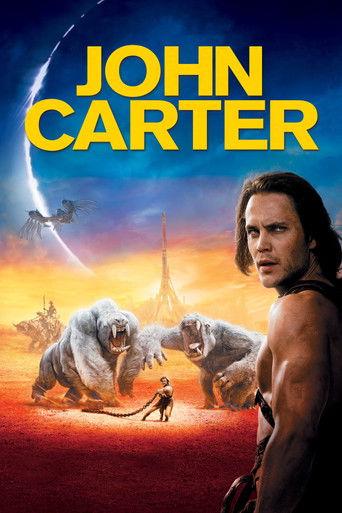
John Carter
2012
There are sourced concerns, but the case is limited.
What counts as a cash grab?
Commercial extraction prioritized over meaningful consumer or creative value. Profit, popularity, adaptations, sequels, remakes, high budgets, and normal marketing do not count by themselves.
Why?
John Carter was a high-budget Disney adaptation released in March 2012 that incurred major financial losses and attracted criticism for a confused marketing strategy, title changes, and heavy studio intervention during promotion. Reporting documents a multimillion dollar write-down by Disney, extensive visual effects work and reshoots during production, and industry commentary that marketing choices undermined audience understanding. Review coverage and studio filings show substantial production investment but clear extraction signals in marketing missteps and a large corporate write-down.
- Disney announced a large write-down tied to John Carter, indicating a major commercial loss.
- Reporting documents confusing title and marketing changes that reduced audience clarity.
- Production involved extensive VFX and reshoots, showing high cost rather than low effort reuse.
View full breakdownHide full breakdown
- Independent industry analyses attribute failure mainly to marketing and studio decisions, not only artistic quality.
Score factors
| Direction | Factor | Evidence | Impact |
|---|---|---|---|
| For | Studio financial write-down | Disney publicly reported a roughly $200 million write-down tied to John Carter after its box office underperformance.[2] | +23 |
| Against | Substantial production and VFX work | Reporting documents that John Carter involved thousands of visual effects shots, extensive production complexity, and significant reshoots under its director from Pixar.[4][1] | -14 |
| For | Confused marketing and title change | Multiple reports state Disney removed Mars from the title and ran trailers and posters that provided little sense of the story, a decision later criticized by the director and press.[1][3] | +12 |
| For | Marketing campaign widely criticized | Contemporary coverage and later retrospectives attribute the film's poor commercial performance chiefly to a misguided marketing campaign and studio regime changes during promotion.[3][5] | +11 |
Confidence: High · Contemporaneous trade reporting and studio filings provide clear financial and marketing evidence; limits include lack of internal leaked memos proving intentional exploitation beyond poor marketing and costly production choices. · Researched 2026-10-15
Sources reviewed
- [1]www.latimes.com
- [2]www.latimes.com
- [3]www.thewrap.com
- [4]www.latimes.com
- [5]www.latimes.com
- [6]www.latimes.com
- [7]en.wikipedia.org
- [8]thewritingking.com
- [9]www.thewrap.com
- [10]www.latimes.com
View 9 more sourcesShow fewer sources
What does the community think?
The AI found some cash-grab signs. What's your read?
Loading community verdict…