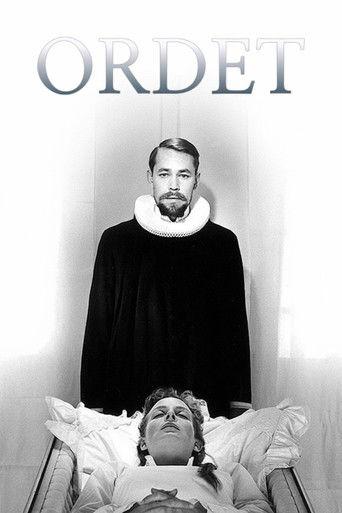
Ordet
1955
The sourced concerns are substantially offset by delivered value.
What counts as a cash grab?
Commercial extraction prioritized over meaningful consumer or creative value. Profit, popularity, adaptations, sequels, remakes, high budgets, and normal marketing do not count by themselves.
Why?
Ordet (1955) is a critically acclaimed Carl Theodor Dreyer film that won the Golden Lion at the 1955 Venice Film Festival and has been preserved and discussed by major film institutions. I found substantial evidence of careful auteur production, festival recognition, archival interest, and quality home-video curation, and no credible sources indicating predatory monetization, rushed or deceptive release practices, or low-effort exploitation of the property for commercial extraction.
- Ordet won the Golden Lion at the 1955 Venice Film Festival, indicating major festival recognition and artistic value.
- Authoritative film institutions and critics document Dreyer’s careful direction and the film’s artistic risks and innovations.
- The Criterion Collection and cultural institutions have curated or written about the film, indicating archival and consumer-oriented releases.
View full breakdownHide full breakdown
- Searches and consulted histories reveal no credible reporting of exploitative monetization, rushed releases, or price/value complaints for this title.
Score factors
| Direction | Factor | Evidence | Impact |
|---|---|---|---|
| Against | Directorial and production craft | Carl Theodor Dreyer directed Ordet with austere, carefully controlled mise-en-scene and it is widely discussed as an auteur work by major film institutions.[1][2] | -18 |
| Against | Festival recognition | Ordet won the Golden Lion at the 16th Venice International Film Festival in 1955, a concrete sign of critical and institutional validation at release.[3][4] | -15 |
| Against | Curated archival/home-video releases | The film has been curated by respected organizations and made available in quality home-video contexts, indicating consumer-friendly, archival-minded distribution rather than predatory reissues.[5][1] | -9 |
| Against | Artistic and technical risk | Scholars and critics describe Dreyer’s choices in Ordet as formal and ethical risks, part of a distinctive late-career oeuvre rather than formulaic reuse.[2][6] | -8 |
| For | No credible evidence of exploitative monetization | Searches of production, festival, archival and critical records reveal no credible reporting of predatory monetization, deceptive release timing, or franchise-style exploitation for Ordet.[3][1][2] | +6 |
| For | No documented price versus value complaints | I found no contemporary or retrospective reporting that claims a concrete price to consumer value mismatch for theatrical or home releases of Ordet.[7][3] | +4 |
Confidence: High · Evidence comes from major film institutions, festival records, and authoritative criticism which document production, awards, and curated releases; absence of industry reporting on exploitative monetization is corroborated but archival distributor accounting is limited so absolute proof of non-explo · Researched 2026-09-22
Sources reviewed
- [1]www.bfi.org.uk
- [2]www.moma.org
- [3]en.wikipedia.org
- [4]en.wikipedia.org
- [5]www.criterion.com
- [6]www.paulschrader.org
- [7]www.rogerebert.com
- [8]www.rottentomatoes.com
- [9]www.bfi.org.uk
- [10]decentfilms.com
View 14 more sourcesShow fewer sources
What does the community think?
The AI sees low cash-grab risk. What's your read?
Loading community verdict…