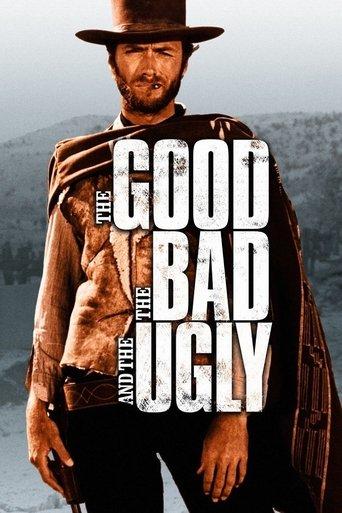
The Good, the Bad and the Ugly
1966
The sourced concerns are substantially offset by delivered value.
What counts as a cash grab?
Commercial extraction prioritized over meaningful consumer or creative value. Profit, popularity, adaptations, sequels, remakes, high budgets, and normal marketing do not count by themselves.
Why?
The Good, the Bad and the Ugly (1966) shows substantial evidence of high production craft, original creative content, and lasting critical and popular value, with Sergio Leone directing on-location shoots and an above-series budget, and Ennio Morricone providing an iconic original score. I found no credible contemporary or retrospective reporting that the film was produced or released as a predatory monetization scheme. The only consumer complaints in sources concern later home-video remixes and edition changes, not the original production or a rushed deceptive theatrical release.
- No credible reporting links the 1966 theatrical production or release to predatory monetization or rushed deceptive practices.
- Sergio Leone executed an expansive, on-location production with a larger budget than his prior films, showing genuine production investment.
- Ennio Morricone composed a distinctive original score for the film that has had long cultural influence, indicating substantive new content.
View full breakdownHide full breakdown
- The film has sustained critical acclaim and preservation, showing genuine consumer and artistic value rather than low-effort exploitation.
Score factors
| Direction | Factor | Evidence | Impact |
|---|---|---|---|
| Against | Production scale and craft | Contemporary accounts report a $1.2 million budget, extended on-location shooting in Spain and Rome and detailed period research by Leone, indicating substantial production investment and craft.[2][3] | -18 |
| Against | Original, influential score | Ennio Morricone composed the film's original, immediately recognizable score which critics and major film outlets cite as culturally influential and integral to the film's identity.[4][1] | -17 |
| Against | Critical acclaim and longevity | Major film institutions and critics rank the film among the greatest westerns and note its long influence, indicating ongoing consumer and critical value rather than short-term exploitation.[3][1] | -11 |
| Against | Artistic and technical risk | Leone's filmmaking employed unusual stylistic risks, including extreme close-ups, jagged editing and shooting certain scenes to pre-recorded music, marking technical and artistic innovation rather than formulaic reuse.[5][2] | -9 |
| For | Home-video edition alterations noted | Sources document purist complaints about some home-video releases, including remixed audio and reinserted scenes, which are distribution criticisms but not proof of a theatrical cash-grab production strategy.[1] | +5 |
| For | No evidence of exploitative monetization | I found no credible contemporary trade reporting or authoritative retrospective analysis describing the film's theatrical production or release as predatory monetization or a deliberate cash grab.[2][1] | +4 |
Confidence: High · Coverage includes multiple authoritative film-history and archival sources documenting production, score authorship, and critical reception, and I found no credible sources alleging predatory monetization for the original 1966 theatrical production, though home-video edition complaints are documente · Researched 2026-07-31
Sources reviewed
- [1]en.wikipedia.org
- [2]www.tcm.com
- [3]www.bfi.org.uk
- [4]www.criterion.com
- [5]www.filmsite.org
- [6]en.wikipedia.org
- [7]arxiv.org
- [8]criterionforum.org
- [9]arxiv.org
- [10]www.criterion.com
View 11 more sourcesShow fewer sources
What does the community think?
The AI sees low cash-grab risk. What's your read?
Loading community verdict…