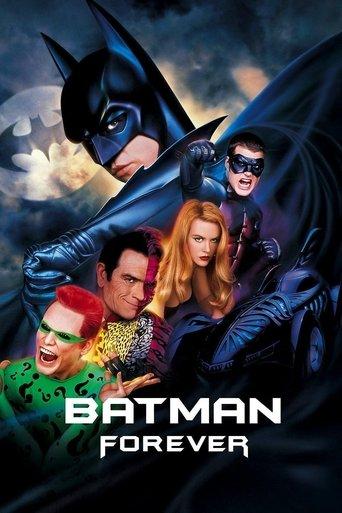
Batman Forever
1995
The sourced concerns are substantially offset by delivered value.
What counts as a cash grab?
Commercial extraction prioritized over meaningful consumer or creative value. Profit, popularity, adaptations, sequels, remakes, high budgets, and normal marketing do not count by themselves.
Why?
Contemporary reporting and industry trade coverage show Warner Bros. and the film's producers pursued aggressive merchandising and cross promotion for Batman Forever, with explicit studio aims to make the film more merchandising-friendly and tie-ins ranging from designer apparel to McDonald’s promotions. Trade sources record toy-company input on character costumes. At the same time the film represents substantial studio investment, distinct production design under Joel Schumacher, a major cast, and large box office returns, so there is also clear evidence of significant production resources and audience appeal.
- Studio and producers publicly framed the film for merchandising and the MTV generation, per production reporting.
- Toy and licensing sources report direct influence on costume and design choices to aid action-figure production.
- Warner executed large cross-promotions and retail/designer tie-ins around release.
View full breakdownHide full breakdown
- Mitigating evidence includes notable production design choices, high-profile cast, and major box office performance.
Score factors
| Direction | Factor | Evidence | Impact |
|---|---|---|---|
| For | Studio merchandising intent | Producer Peter MacGregor-Scott and studio sources described making Batman Forever for the MTV generation with full merchandising appeal.[2][1] | +20 |
| For | Wide cross-promotion and designer tie-ins | Press coverage documents extensive cross-promotional campaigns, designer apparel lines and retail merchandising from Warner and partners timed to the film's release.[5][3][4] | +19 |
| For | Toy-company influence on design | Contemporaneous trade reporting states Kenner and toy developers influenced on-screen costume choices, for example asking that the Riddler be shown in tights so figures would look better.[6] | +18 |
| Against | Notable production design and scale | Contemporary reviews and reporting describe Schumacher’s overscale, baroque 'pop opera' production design and deliberate stylistic choices, indicating significant creative and technical work.[1] | -12 |
| For | Home video release and marketing spend | Industry reporting lists Warner Home Video pricing and a major marketing push for the home-video release, reflecting a planned downstream revenue strategy.[7] | +10 |
| Against | Commercial success and audience reception | The film opened to a record opening weekend and grossed approximately $336.5 million worldwide, while critical reviews were mixed and audience CinemaScore polling was strong.[2] | -8 |
Confidence: High · Multiple contemporary mainstream and trade outlets document explicit studio merchandising intent and toy-industry influence, while production reporting and box office records provide corroborating mitigating evidence; gaps are limited because primary contemporary coverage is available. · Researched 2026-09-19
Sources reviewed
- [1]www.latimes.com
- [2]en.wikipedia.org
- [3]www.latimes.com
- [4]www.marketingweek.com
- [5]www.washingtonpost.com
- [6]scholar.lib.vt.edu
- [7]www.worldradiohistory.com
- [8]www.1995batman.com
- [9]citeseerx.ist.psu.edu
- [10]www.latimes.com
View 10 more sourcesShow fewer sources
What does the community think?
The AI sees low cash-grab risk. What's your read?
Loading community verdict…