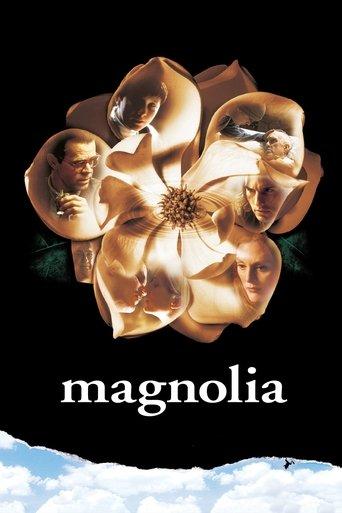
Magnolia
1999
The sourced concerns are substantially offset by delivered value.
What counts as a cash grab?
Commercial extraction prioritized over meaningful consumer or creative value. Profit, popularity, adaptations, sequels, remakes, high budgets, and normal marketing do not count by themselves.
Why?
Magnolia (1999) is an original, director-driven ensemble drama written and directed by Paul Thomas Anderson. Contemporary reporting and later retrospectives describe a long, risky three-hour film made with substantial rehearsal, an ambitious score and intricate interlocked stories. Box office and distribution data show a conventional limited-then-wide release and modest commercial returns, and I found no credible reporting of predatory monetization, deceptive release practices, or franchise-style reuse that would indicate a cash grab.
- No credible reporting found of predatory monetization, aggressive tie-ins, or franchise-style exploitation.
- Film is an original screenplay by Paul Thomas Anderson, not reuse of an existing IP.
- Contemporary reviews and interviews document substantial production effort, rehearsal, and artistic risk.
View full breakdownHide full breakdown
- Box office performance was modest and release followed a standard limited-to-wide rollout, not a rushed cash-driven launch.
Score factors
| Direction | Factor | Evidence | Impact |
|---|---|---|---|
| Against | Documented production craft and rehearsal | Interviews and coverage document Paul Thomas Anderson's writer-director authorship, musical collaboration, and cast rehearsal, describing deliberate creative decisions and production effort.[3][4][1] | -18 |
| Against | Original screenplay and creative authorship | Magnolia is credited as an original screenplay by Paul Thomas Anderson, indicating new creative content rather than low-effort reuse of existing material.[5] | -16 |
| Against | Critical recognition of ambition and risk | Contemporary critics praised Magnolia's operatic ambition, ensemble performances and formal risks, and later retrospectives include it in 'great movies' lists, which supports substantive creative value over simple extraction.[1] | -9 |
| For | No documented predatory monetization | Searches found no contemporaneous reporting of predatory monetization, mandatory tie-ins, or exploitative ancillary schemes tied to Magnolia at release.[2] | +8 |
| For | Modest box office and standard release pattern | Data show a limited opening (December 1999) expanding to wider release and worldwide gross roughly in line with modest commercial performance, with no evidence this reflected deceptive pricing or extraordinary monetization tactics.[2] | +7 |
| For | No reporting of rushed or deceptive release | Contemporary coverage and release records indicate a planned limited release window and festival/critic coverage, with no reliable reports that the film was rushed out to capture revenue or marketed deceptively.[2] | +5 |
Confidence: High · The conclusion is based on authoritative contemporaneous reviews, director interviews and box office/distribution records; internal studio documents or direct evidence of monetization strategy were not found but absence of reporting across major sources is consistent. · Researched 2026-08-11
Sources reviewed
- [1]www.rogerebert.com
- [2]www.the-numbers.com
- [3]freshairarchive.org
- [4]www.bfi.org.uk
- [5]assets.scriptslug.com
- [6]en.wikipedia.org
- [7]www.imdb.com
- [8]www.imdb.com
- [9]play.google.com
- [10]www.salon.com
View 46 more sourcesShow fewer sources
- [11]www.commonsensemedia.org
- [12]www.boxofficemojo.com
- [13]www.csmonitor.com
- [14]www.awn.com
- [15]joshanderson.me
- [16]www.timeout.ru
- [17]cigsandredvines.blogspot.com
- [18]www.reddit.com
- [19]www.reddit.com
- [20]www.reddit.com
- [21]www.reddit.com
- [22]catalogimages.wiley.com
- [23]www.reddit.com
- [24]www.filmcomment.com
- [25]escholarship.org
- [26]www.reddit.com
- [27]www.reddit.com
- [28]www.reddit.com
- [29]arxiv.org
- [30]www.reddit.com
- [31]www.reddit.com
- [32]www.reddit.com
- [33]www.reddit.com
- [34]arxiv.org
- [35]www.rogerebert.com
- [36]www.rogerebert.com
- [37]www.rottentomatoes.com
- [38]www.rogerebert.com
- [39]www.imdb.com
- [40]www.cine.com
- [41]www.youtube.com
- [42]www.films101.com
- [43]editorial.rottentomatoes.com
- [44]en.wikiquote.org
- [45]www.youtube.com
- [46]www.reddit.com
- [47]www.reddit.com
- [48]en.wikipedia.org
- [49]www.reddit.com
- [50]en.wikipedia.org
- [51]cdn.festival-cannes.com
- [52]de.wikipedia.org
- [53]www.screenwritingsavant.com
- [54]www.reddit.com
- [55]www.reddit.com
- [56]www.reddit.com
What does the community think?
The AI sees low cash-grab risk. What's your read?
Loading community verdict…