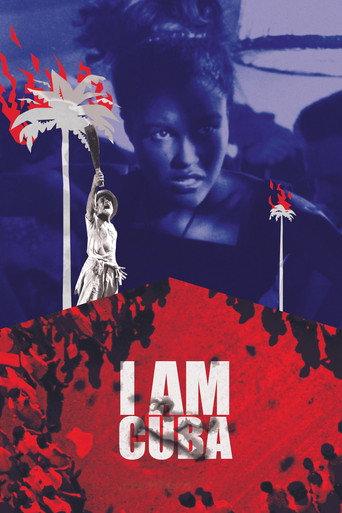
I Am Cuba
1964
The sourced concerns are substantially offset by delivered value.
What counts as a cash grab?
Commercial extraction prioritized over meaningful consumer or creative value. Profit, popularity, adaptations, sequels, remakes, high budgets, and normal marketing do not count by themselves.
Why?
I Am Cuba (Soy Cuba, 1964) is a Soviet-Cuban state co-production directed by Mikhail Kalatozov that functioned as a poetic propaganda study of the 1959 Cuban revolution. Contemporary records and later histories show it was a political, state-funded project that failed commercially on release, then lay obscure until cineastes and distributors restored and reissued it in the 1990s and 2000s. Available production and distribution reporting emphasize ambitious, technically difficult cinematography and careful restorations, there is no credible evidence that the original project or later reissues were designed as predatory commercial cash grabs.
- No credible sources describe predatory monetization, exploitative pricing, or franchise-style brand exploitation for I Am Cuba.
- Primary sources identify the film as a Soviet-Cuban state-funded political/art film, not a studio franchise product seeking churn.
- Multiple authoritative accounts highlight extensive, risky cinematography and ambitious long takes as central creative aims.
View full breakdownHide full breakdown
- Rediscovery and restoration by cinephile distributors and champions like Milestone, plus documentary coverage, indicate curatorial interest rather than rushed monetization.
Score factors
| Direction | Factor | Evidence | Impact |
|---|---|---|---|
| For | No evidence of predatory monetization | Contemporary histories and film-release records describe I Am Cuba as a state-funded Soviet-Cuban production and record box-office failure, with no reporting of predatory monetization strategies or price gouging tied to the film.[1][4][2] | +21 |
| Against | Highly ambitious cinematography | Multiple authoritative accounts single out Sergei Urusevsky's elaborate long takes and technically difficult camera work as major features of the film's aesthetic and production challenge.[6][5] | -19 |
| Against | Original substantive narratives and screenplay | I Am Cuba comprises four distinct narratives about pre-revolutionary Cuba adapted from original Soviet and Cuban writing, credited to poet Yevgeny Yevtushenko and writer Enrique Pineda Barnet, showing substantive new content rather than cheap reuse.[1][3] | -12 |
| For | Not a franchise or brand cash-in | The film was an original Soviet-Cuban co-production with a politically driven script, not part of a preexisting commercial franchise or brand being exploited for quick profit.[1][3] | +11 |
| For | No evidence of rushed or deceptive release | Accounts of the film's history indicate an initial cold reception and later careful rediscovery, restoration, and curated re-release by distributors and documentarians rather than evidence of rushed or deceptive market timing.[7][2] | +11 |
Confidence: High · Contemporary production histories, press materials, trade coverage, and restoration reporting consistently document state funding, technical ambition, and curator-led reissues, and I found no credible sources alleging predatory monetization or cash-grab practices. · Researched 2026-08-12
Sources reviewed
- [1]en.wikipedia.org
- [2]cdn.theasc.com
- [3]www.encyclopedia.com
- [4]www.boxofficemojo.com
- [5]www.bfi.org.uk
- [6]theasc.com
- [7]www.screendaily.com
- [8]es.wikipedia.org
- [9]en.wikipedia.org
- [10]en.wikipedia.org
View 29 more sourcesShow fewer sources
- [11]en.wikipedia.org
- [12]www.rottentomatoes.com
- [13]de.wikipedia.org
- [14]www.wikidata.org
- [15]www.rottentomatoes.com
- [16]www.imdb.com
- [17]www.fondazioneprada.org
- [18]arxiv.org
- [19]www.allmovie.com
- [20]pmc.ncbi.nlm.nih.gov
- [21]www.fondazioneprada.org
- [22]www.idfa.nl
- [23]www.cbsnews.com
- [24]www.reddit.com
- [25]www.reddit.com
- [26]www.reddit.com
- [27]arxiv.org
- [28]www.encyclopedia.com
- [29]learnaboutfilm.com
- [30]www.imdb.com
- [31]www.avclub.com
- [32]everything.explained.today
- [33]www.imdb.com
- [34]insightcrunch.com
- [35]www.leedsfilm.com
- [36]www.reddit.com
- [37]www.doku-arts.de
- [38]cadmus.eui.eu
- [39]dialnet.unirioja.es
What does the community think?
The AI sees low cash-grab risk. What's your read?
Loading community verdict…