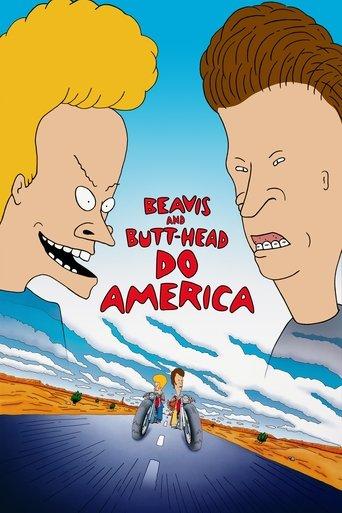
Beavis and Butt-Head Do America
1996
The sourced concerns are substantially offset by delivered value.
What counts as a cash grab?
Commercial extraction prioritized over meaningful consumer or creative value. Profit, popularity, adaptations, sequels, remakes, high budgets, and normal marketing do not count by themselves.
Why?
Beavis and Butt-Head Do America is a 1996 feature adaptation of Mike Judge's MTV series released December 20, 1996, produced by MTV Films and distributed by Paramount. Contemporary reporting and box office records show a roughly $12 million production budget and about $63 million domestic gross, strong soundtrack sales, and an intensive promotional campaign, while critics gave generally positive reviews praising that the film retained the series voice and added a feature-length story and music supervision.
- Creator Mike Judge led the project, critics praised the film for retaining the show's voice, and the feature adds original story and music supervision.
- The film had a modest $12 million budget and strong box office performance, indicating a commercially successful, fully produced theatrical release.
- Substantial promotional activity and a high-selling soundtrack show clear commercial monetization outside ticket sales.
View full breakdownHide full breakdown
- I found no credible contemporary evidence of predatory pricing, deceptive release practices, or an obviously rushed production.
Score factors
| Direction | Factor | Evidence | Impact |
|---|---|---|---|
| Against | Creator-led production | Creator Mike Judge wrote, directed, and performed principal voices, indicating original creative control and nontrivial production investment.[1][2] | -17 |
| Against | Critical response and new content | Contemporary reviews and aggregators show generally positive reception and note the film provides a feature-length plot and music supervision beyond the short TV segments.[4][3] | -14 |
| Against | Box office and soundtrack sales | The film recouped multiple times its reported $12 million budget at the box office, and reporting documents large soundtrack sales as an additional revenue stream.[1][5] | -10 |
| For | Heavy promotional monetization | Contemporary trade reporting documents an aggressive, inventive marketing campaign and soundtrack tie-ins that monetized the brand beyond theatrical tickets.[7][6] | +9 |
Confidence: High · Conclusions rely on contemporary trade and mainstream press reporting, box office records, and review aggregators; sources show clear promotion and monetization but no credible evidence of predatory or deceptive practices. · Researched 2026-09-29
Sources reviewed
- [1]www.boxofficemojo.com
- [2]en.wikipedia.org
- [3]www.rottentomatoes.com
- [4]www.metacritic.com
- [5]www.latimes.com
- [6]www.latimes.com
- [7]www.awn.com
- [8]www.imdb.com
- [9]www.the-numbers.com
- [10]www.latimes.com
View 11 more sourcesShow fewer sources
- [11]www.imdb.com
- [12]catalog.afi.com
- [13]www.imdb.com
- [14]movieo.me
- [15]www.worldradiohistory.com
- [16]en.wikipedia.org
- [17]newspapers.swco.ttu.edu
- [18]en.wikipedia.org
- [19]lib-dspace1.ttu.edu
- [20]de.wikipedia.org
- [21]dl.tufts.edu
What does the community think?
The AI sees low cash-grab risk. What's your read?
Loading community verdict…