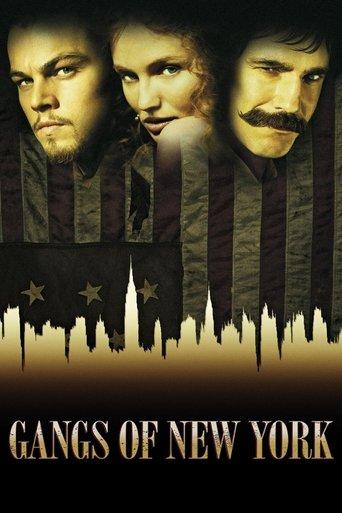
Gangs of New York
2002
The sourced concerns are substantially offset by delivered value.
What counts as a cash grab?
Commercial extraction prioritized over meaningful consumer or creative value. Profit, popularity, adaptations, sequels, remakes, high budgets, and normal marketing do not count by themselves.
Why?
Gangs of New York (2002) was Martin Scorsese’s long-gestating, high-budget historical epic, financed and distributed by Miramax, filmed at Cinecittà and on New York locations, and released in U.S. theaters on December 20, 2002. The picture involved large practical sets and thousands of extras, attracted ten Academy Award nominations, and received broadly positive critical notice for production design and performances. Reporting shows commercial pressure from Miramax, including runtime trimming and release-date jockeying, but I found no credible evidence of predatory monetization, low-effort reuse, or franchise-style brand exploitation.
- Extensive, costly practical production design and long development contradict a low-effort cash-grab narrative.
- The film earned significant critical recognition including ten Academy Award nominations, indicating substantive creative value.
- Contemporaneous reporting documents Miramax/Weinstein pressure over runtime and release timing, showing commercial pressures but not clear predatory extraction.
View full breakdownHide full breakdown
- No credible sources show predatory monetization, exploitative tie-ins, or deceptive pricing for this title.
Score factors
| Direction | Factor | Evidence | Impact |
|---|---|---|---|
| Against | Production craft and scale | The production built an extensive practical recreation of 19th century Five Points, filmed at Cinecittà and on location, with thousands of extras and elaborate sets.[3][1][2] | -18 |
| Against | Long development and original material | Scorsese developed the project for decades and adapted material from Herbert Asbury while creating substantial original screenplay and production work.[1][4] | -14 |
| Against | Critical and awards recognition | The film received broadly positive critical attention for its production design and performances and earned ten Academy Award nominations at the 2003 Oscars.[5][1] | -9 |
| For | Studio pressure on runtime and release timing | Contemporaneous reporting documents Miramax and Harvey Weinstein pressing over runtime, negotiating cuts and hastily setting holiday release dates, producing a noted 'final-cut' dispute.[7][6][8] | +8 |
Confidence: High · Contemporaneous reporting, studio and trade coverage, official Oscar records and box-office databases provide direct, specific evidence about production scale, financing and editorial pressure; there is reliable absence of sources documenting predatory monetization or low-effort reuse. · Researched 2026-07-24
Sources reviewed
- [1]en.wikipedia.org
- [2]www.boxofficemojo.com
- [3]www.theguardian.com
- [4]catalog.afi.com
- [5]www.oscars.org
- [6]www.latimes.com
- [7]www.newyorker.com
- [8]filmmakermagazine.com
- [9]www.rogerebert.com
- [10]www.the-numbers.com
View 122 more sourcesShow fewer sources
- [11]www.imdb.com
- [12]www.rottentomatoes.com
- [13]www.jpbox-office.com
- [14]www.rogerebert.com
- [15]www.metacritic.com
- [16]www.walmart.com
- [17]www.filmweb.pl
- [18]en.wikipedia.org
- [19]en.wikipedia.org
- [20]en.wikipedia.org
- [21]en.wikipedia.org
- [22]en.wikipedia.org
- [23]www.reddit.com
- [24]www.alliedacademies.org
- [25]iiif.library.cmu.edu
- [26]www.oscars.org
- [27]www.oscars.org
- [28]www.theguardian.com
- [29]www.apr.org
- [30]www.oscars.org
- [31]www.allocine.fr
- [32]www.kcbd.com
- [33]www.ksmu.org
- [34]www.wbaa.org
- [35]www.nprillinois.org
- [36]en.wikipedia.org
- [37]www.wvia.org
- [38]en.wikipedia.org
- [39]awardsdatabase.oscars.org
- [40]en.wikipedia.org
- [41]ampasstorage.blob.core.windows.net
- [42]en.wikipedia.org
- [43]www.wnypapers.com
- [44]fr.wikipedia.org
- [45]www.reddit.com
- [46]awardsdatabase.oscars.org
- [47]www.reddit.com
- [48]www.oscars.org
- [49]www.oscars.org
- [50]www.scribd.com
- [51]huggingface.co
- [52]cranesareflying.mistdriven.com
- [53]gangsterbb.net
- [54]www.anphoblacht.com
- [55]www.theguardian.com
- [56]tile.loc.gov
- [57]gahistoricnewspapers.galileo.usg.edu
- [58]www.clinton-county.org
- [59]upload.wikimedia.org
- [60]www.imdb.com
- [61]mcgrathsearch.com
- [62]www.foxnews.com
- [63]fileserver-az.core.ac.uk
- [64]upload.wikimedia.org
- [65]thecommonsjournal.org
- [66]www.walkingthepostroad.net
- [67]www.adirondacklife.com
- [68]www.scribd.com
- [69]www.fiddlersgreen.net
- [70]gahistoricnewspapers.galileo.usg.edu
- [71]www.foxnews.com
- [72]everything.explained.today
- [73]insightcrunch.com
- [74]www.latimes.com
- [75]www.filmscoremonthly.com
- [76]www.vanityfair.com
- [77]themoviereport.com
- [78]www.dvdjournal.com
- [79]everything.explained.today
- [80]dokumen.pub
- [81]nalsarpro.org
- [82]www.awn.com
- [83]uscomkempkled.weebly.com
- [84]thaiahpa.com
- [85]sunridgecorp.com
- [86]www.stereonet.com
- [87]animatedviews.com
- [88]justapedia.org
- [89]www.dvdjournal.com
- [90]archive.thedigitalbits.com
- [91]www.theguardian.com
- [92]forum.broadwayworld.com
- [93]dvdizzy.com
- [94]www.dvdjournal.com
- [95]ipfs.desmos.network
- [96]www.theonering.net
- [97]www.dvdjournal.com
- [98]citeseerx.ist.psu.edu
- [99]www.thejudyroom.com
- [100]investor.activision.com
- [101]www.worldradiohistory.com
- [102]m.imdb.com
- [103]history-on-trial.lib.lehigh.edu
- [104]www.films101.com
- [105]m.filmaffinity.com
- [106]scorsese.weebly.com
- [107]www.flicks.us
- [108]es.wikipedia.org
- [109]scorsese.weebly.com
- [110]www.wsws.org
- [111]it.wikipedia.org
- [112]www.theguardian.com
- [113]www.wsws.org
- [114]letterboxd.com
- [115]en.wikipedia.org
- [116]www.filmcomment.com
- [117]arthouse.ch
- [118]www.harvardmagazine.com
- [119]eprints.ums.ac.id
- [120]en.wikipedia.org
- [121]lwk.ffmm.com
- [122]www.reddit.com
- [123]access.archive-ouverte.unige.ch
- [124]topzle.com
- [125]www.dfi.dk
- [126]wikiland.org
- [127]www.latimes.com
- [128]www.indielondon.co.uk
- [129]www.welt.de
- [130]www.screenwritersutopia.com
- [131]assets-global.website-files.com
- [132]cases.justia.com
What does the community think?
The AI sees low cash-grab risk. What's your read?
Loading community verdict…