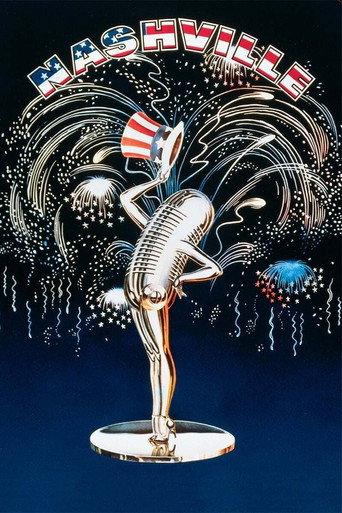
Nashville
1975
The sourced concerns are substantially offset by delivered value.
What counts as a cash grab?
Commercial extraction prioritized over meaningful consumer or creative value. Profit, popularity, adaptations, sequels, remakes, high budgets, and normal marketing do not count by themselves.
Why?
Nashville (1975) shows strong evidence of being a deliberate artistic project rather than a commercial cash grab. Contemporary and retrospective sources document Robert Altman creating an original ensemble film with cast-written songs, experimental overlapping dialogue, and complex multi-track sound work, the film won major awards and critical praise, and scholarly and critical histories emphasize production craft and originality. I found no credible contemporaneous evidence of predatory monetization, rushed deceptive release practices, or franchise-style brand exploitation tied to its theatrical rollout.
- Multiple sources record original songs written or performed by cast members, including Oscar-winning "I’m Easy".
- Scholars and critics emphasize Altman’s improvisational ensemble methods, complex sound design, and narrative experimentation.
- The film received widespread critical acclaim and major award nominations, indicating substantive artistic reception.
View full breakdownHide full breakdown
- No contemporaneous reporting or archival material was found showing predatory monetization, deceptive release tactics, or franchising to extract consumers.
Score factors
| Direction | Factor | Evidence | Impact |
|---|---|---|---|
| Against | Ambitious production craft | Contemporary reporting and retrospectives document Altman’s large-scale ensemble direction, improvisational script process, and attention to on-location sound and staging as central to the film’s production.[1][2][3] | -18 |
| Against | Original music by cast | Most of the songs heard in the film were written or performed by cast members specifically for Nashville, and Keith Carradine’s "I’m Easy" won the Academy Award for Best Original Song.[5][1] | -17 |
| Against | Critical acclaim and awards | The film received widespread critical praise, major award nominations including Best Picture and Best Director, and an Academy Award for Best Original Song, indicating substantive artistic value and reception.[4][6] | -11 |
| Against | Narrative and technical risk | Critics and technical writeups highlight overlapping dialogue, multi-track location recording, and narrative experimentation as deliberate artistic and technical risks taken by Altman and his crew.[1][7][2] | -8 |
| For | No evidence of predatory monetization | Searches of contemporary and retrospective production and distribution coverage revealed no credible reports of predatory monetization schemes, excessive tie-in merchandising, deceptive pricing, or pay-to-view exploitation connected to the film’s 1975 release.[6][4][1] | +4 |
| For | Not recycled franchise or low-effort reuse | The project was developed by Altman and collaborators as an original ensemble film, it was not a sequel remake or reuse of an existing franchise property.[4][3][2] | +3 |
Confidence: High · The title has extensive contemporary and scholarly coverage documenting its original production, music, and technical approach, and searches uncovered no credible contemporaneous evidence of extraction or predatory monetization, though archival release accounting details are limited in public source · Researched 2026-09-22
Sources reviewed
- [1]www.criterion.com
- [2]www.bfi.org.uk
- [3]cinemontage.org
- [4]catalog.afi.com
- [5]pitchfork.com
- [6]www.tcm.com
- [7]apps.lib.umich.edu
- [8]en.wikipedia.org
- [9]www.deepfocusreview.com
- [10]www.amsmusicology.org
View 7 more sourcesShow fewer sources
What does the community think?
The AI sees low cash-grab risk. What's your read?
Loading community verdict…