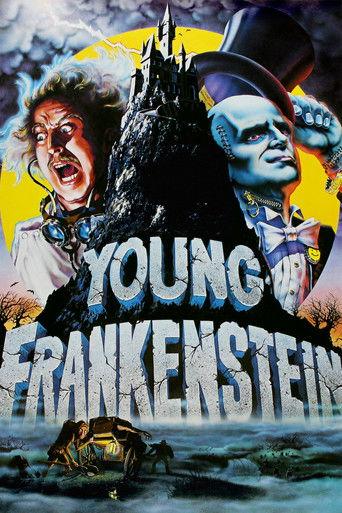
Young Frankenstein
1974
The sourced concerns are substantially offset by delivered value.
What counts as a cash grab?
Commercial extraction prioritized over meaningful consumer or creative value. Profit, popularity, adaptations, sequels, remakes, high budgets, and normal marketing do not count by themselves.
Why?
Young Frankenstein (1974) is an original comedy film written by Gene Wilder and Mel Brooks and directed by Mel Brooks, widely documented as a carefully constructed homage to 1930s Universal horror with deliberate black and white cinematography, period production design, and notable technical choices. Contemporary and retrospective coverage emphasizes the film's craft, performances, and enduring popularity. I found no credible reporting that the 1974 release was driven by predatory monetization, deceptive release practices, or evident low-effort brand exploitation.
- The screenplay was co-written by Gene Wilder and Mel Brooks and received major awards recognition.
- Multiple authoritative sources describe careful period production design and black and white cinematography.
- Contemporary reviews praised the film’s craft and comic inventiveness, supporting substantive creative value.
View full breakdownHide full breakdown
- I found no credible contemporary or retrospective sources alleging predatory monetization or deceptive release for the 1974 film.
Score factors
| Direction | Factor | Evidence | Impact |
|---|---|---|---|
| Against | Deliberate production craft | Contemporary and retrospective sources describe the film as a polished, lovingly constructed visual homage to 1930s Universal horror with detailed sets and cinematography choices.[2][1] | -18 |
| Against | Original screenplay and recognition | The film was an original screenplay credited to Gene Wilder and Mel Brooks and received major awards recognition including an Academy Award nomination for Best Adapted Screenplay.[3][5] | -17 |
| Against | Critical and audience reception | Contemporary reviews and later retrospectives emphasize the film’s comedic quality and enduring popularity, indicating it delivered clear consumer and creative value.[4][6] | -9 |
| Against | Technical and artistic risk | The choice to shoot in black and white and to recreate period camera and lighting styles is repeatedly noted as a deliberate technical risk that contributed to the film’s aesthetic.[1][4] | -8 |
| For | No credible evidence of predatory monetization | I found no contemporary reporting or credible retrospectives alleging predatory monetization, deceptive release timing, or deliberate price/value mismatch for the film’s 1974 theatrical release.[3][2][4] | +4 |
Confidence: High · Evidence comes from multiple authoritative contemporary and retrospective sources including AFI, the Library of Congress essay, TCM, and major critics, and there is no credible reporting indicating predatory monetization or rushed deceptive release for the 1974 film. · Researched 2026-08-13
Sources reviewed
- [1]www.loc.gov
- [2]www.tcm.com
- [3]catalog.afi.com
- [4]www.rogerebert.com
- [5]en.wikipedia.org
- [6]www.the-independent.com
- [7]www.newyorker.com
- [8]en.wikipedia.org
- [9]www.20thcenturystudios.com
- [10]www.rogerebert.com
View 16 more sourcesShow fewer sources
- [11]reviewsfrommycouch.com
- [12]www.newyorker.com
- [13]www.horror-movies.ca
- [14]www.dvdjournal.com
- [15]www.thefilmagazine.com
- [16]assets.scriptslug.com
- [17]en.wikipedia.org
- [18]afisilver.afi.com
- [19]nickbrannam.co.uk
- [20]fr.wikipedia.org
- [21]www.walterfilm.com
- [22]es.wikipedia.org
- [23]de.wikipedia.org
- [24]www.reddit.com
- [25]www.reddit.com
- [26]www.reddit.com
What does the community think?
The AI sees low cash-grab risk. What's your read?
Loading community verdict…