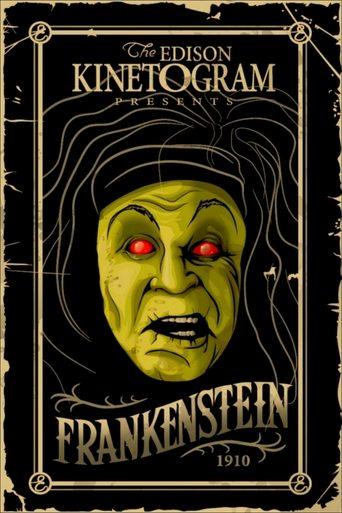
Frankenstein
1910
The sourced concerns are substantially offset by delivered value.
What counts as a cash grab?
Commercial extraction prioritized over meaningful consumer or creative value. Profit, popularity, adaptations, sequels, remakes, high budgets, and normal marketing do not count by themselves.
Why?
Frankenstein (1910) is a 14-minute Edison Studios short directed by J. Searle Dawley, widely documented as the earliest known cinematic adaptation of Mary Shelley’s novel. Archival records and restoration work by the Library of Congress confirm cultural and historical value, while production notes show it was shot rapidly at Edison’s Bronx facilities. I found no contemporaneous evidence of predatory pricing or deceptive release tactics, though some later commercial home-video presentations have been criticized for overlayed logos that reduce viewing quality.
- No primary-source evidence found of predatory monetization or deceptive release for the 1910 Edison release.
- The film is historically significant as the earliest known screen adaptation and has been preserved and restored by the Library of Congress.
- Production was rapid, reportedly shot over three days, which could indicate a rushed schedule though this was common for one-reel films.
View full breakdownHide full breakdown
- A modern home-video release was criticized for superimposed logos, a later commercial practice that harmed consumer value.
Score factors
| Direction | Factor | Evidence | Impact |
|---|---|---|---|
| Against | First adaptation and unique content | Contemporary records and filmographies identify this as the earliest known cinematic adaptation of Mary Shelley’s novel and note creative choices such as a chemical vat creation scene not present in later icons of the monster.[2][4] | -16 |
| Against | Production craft | The film was produced by Edison Studios and written and directed by J. Searle Dawley at Edison’s Bronx studio, showing it was a standard studio production with professional crew and cast.[1][3] | -15 |
| Against | Preservation and public access | The Library of Congress accessioned the sole surviving nitrate print and performed a 2K scan and preservation, demonstrating institutional recognition of cultural value and consumer-friendly stewardship.[5][1] | -11 |
| Against | No evidence of predatory monetization at release | Surveyed archival descriptions, filmographies, and preservation notes provide no contemporaneous documentation of exploitative pricing, deceptive release, or other predatory monetization tied to the 1910 Edison release.[1][3][2] | -9 |
| For | Later commercial presentation degraded value | A SilentEra home-video review criticizes a commercial disc for superimposing multiple logos over the image, indicating a later commercial release practice that reduced consumer viewing quality.[6] | +8 |
| For | Rapid production schedule | Sources report Searle Dawley shot the film in three days in January 1910, a rapid schedule that may indicate a rushed production but does not by itself show exploitative intent.[1] | +5 |
Confidence: High · Archival and film-reference sources including the Library of Congress and established filmographies provide direct documentation of production, preservation, and the absence of contemporaneous predatory-monetization claims, though detailed contemporaneous box-office or pricing records are not availa · Researched 2026-09-13
Sources reviewed
- [1]www.loc.gov
- [2]www.silentera.com
- [3]catalog.afi.com
- [4]mainweb.awsprod.nlm.nih.gov
- [5]blogs.loc.gov
- [6]www.silentera.com
- [7]en.wikipedia.org
- [8]era.ed.ac.uk
- [9]www.publicdomainmovie.net
- [10]en.wikipedia.org
View 16 more sourcesShow fewer sources
- [11]guides.loc.gov
- [12]commons.wikimedia.org
- [13]thomasedisonbiography.com
- [14]www.nlm.nih.gov
- [15]www.youtube.com
- [16]www.story-of-the-movies.com
- [17]en.wikipedia.org
- [18]en.wikipedia.org
- [19]fr.wikipedia.org
- [20]iris.unive.it
- [21]de.wikipedia.org
- [22]journals.openedition.org
- [23]www.loc.gov
- [24]loc.gov
- [25]fanac.org
- [26]www.reddit.com
What does the community think?
The AI sees low cash-grab risk. What's your read?
Loading community verdict…