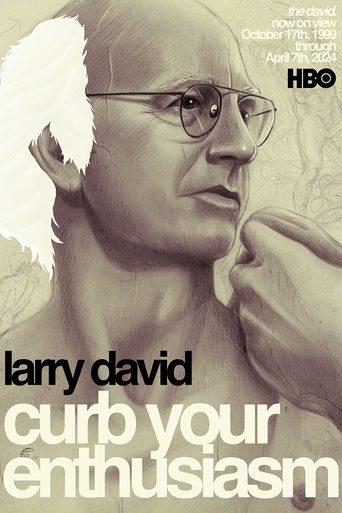
Larry David: Curb Your Enthusiasm
1999
The sourced concerns are substantially offset by delivered value.
What counts as a cash grab?
Commercial extraction prioritized over meaningful consumer or creative value. Profit, popularity, adaptations, sequels, remakes, high budgets, and normal marketing do not count by themselves.
Why?
Larry David: Curb Your Enthusiasm is a 1999 one-hour HBO mockumentary special created by and starring Larry David, presented as original documentary-style and staged material about his return to stand-up and the making of an HBO special. Contemporary press described it as an unusual, creative one-off that functioned as a prototype for the subsequent series. In the sources consulted there is no reporting of predatory monetization, deceptive release practices, or concrete evidence that the special was produced primarily as a commercial extraction.
- No contemporary or later reporting found that alleges predatory monetization or deceptive release practices around the 1999 HBO special.
- Contemporary coverage and archives describe the program as an original mockumentary special that acted as a prototype for the later series.
- Major outlets gave generally favorable coverage at release, framing it as creative and unusual rather than rushed or low-effort.
View full breakdownHide full breakdown
- Format relied on mockumentary and improvisational techniques, indicating artistic risk rather than straight franchise exploitation.
Score factors
| Direction | Factor | Evidence | Impact |
|---|---|---|---|
| Against | Production and crew involvement | The 1999 HBO special was produced as a one-hour mockumentary for HBO with credited direction and production roles and served as the prototype for the later series.[4][2] | -16 |
| Against | Original material and format | Reports describe the special as original mockumentary material combining staged set pieces and stand-up, not as recycled Seinfeld episodes.[3][1] | -15 |
| Against | Contemporary critical reception | Contemporary reviews and aggregators characterize the special as funny and unusual, giving generally positive coverage rather than noting a rushed cash-in.[5][6] | -11 |
| Against | Artistic and formal risk | The special employed mockumentary and improvisational methods that were unconventional for a premium-cable special, indicating creative risk rather than formulaic reuse.[2][3] | -7 |
| For | No evidence of low-effort reuse | Contemporary accounts frame the special as a creative follow-up to Seinfeld rather than a demonstrably low-effort reuse of prior material.[5][1] | +5 |
| For | No evidence of exploitative monetization | Searches of contemporary press and later coverage reveal no allegations or reporting of predatory monetization, deceptive pricing, or pay-to-view exploitation tied to the 1999 HBO special.[1][4] | +4 |
Confidence: High · Multiple reputable contemporary reviews and production writeups were consulted and show substantive creative intent and no reporting of predatory monetization, though internal financial contracts and HBO distribution accounting were not available in these public sources. · Researched 2026-08-01
Sources reviewed
- [1]en.wikipedia.org
- [2]interviews.televisionacademy.com
- [3]www.theguardian.com
- [4]www.latimes.com
- [5]www.washingtonpost.com
- [6]www.rottentomatoes.com
- [7]www.imdb.com
- [8]vi.web-platforms-vi.nyti.nyt.net
- [9]en.wikipedia.org
- [10]thecinemaholic.com
View 14 more sourcesShow fewer sources
What does the community think?
The AI sees low cash-grab risk. What's your read?
Loading community verdict…