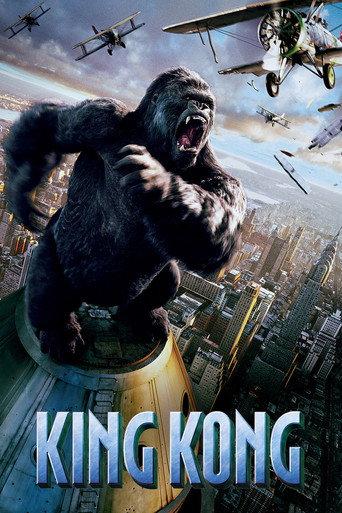
King Kong
2005
The sourced concerns are substantially offset by delivered value.
What counts as a cash grab?
Commercial extraction prioritized over meaningful consumer or creative value. Profit, popularity, adaptations, sequels, remakes, high budgets, and normal marketing do not count by themselves.
Why?
Peter Jackson's King Kong (2005) shows strong evidence of being a substantial, high-cost creative project rather than a simple commercial extraction. Contemporary production reporting, technical credits and reviews emphasize heavy investment in visual effects, extended new character material and directoral control, and the film won major awards for craft. I found no credible reporting of predatory monetization, deceptive release practices, or low-effort reuse tied to the original theatrical release, though the property was later used in theme-park and ancillary tie-ins.
- No contemporary reporting or credible criticism identified predatory monetization or deceptive release practices for the 2005 theatrical release.
- The film involved major technical investment and risk, Weta Digital work, and multiple Academy Awards for technical categories.
- Contemporary critics praised the movie's length and added character material as substantive new content rather than padding.
View full breakdownHide full breakdown
- The King Kong brand was later used in theme-park and ancillary tie-ins, which show downstream exploitation of rights but not proof of a cash grab at release.
Score factors
| Direction | Factor | Evidence | Impact |
|---|---|---|---|
| Against | Technical craft and awards | King Kong (2005) won Academy Awards for Visual Effects, Sound Mixing and Sound Editing, and contemporary reporting highlights large VFX work by Weta Digital.[1] | -18 |
| Against | Expanded story and runtime | Critics noted the film's 187 minute runtime and expanded 1930s backstory and character arcs, evidence of substantial new narrative content rather than obvious padding.[2] | -16 |
| Against | High budget and technical risk | The production ran to a roughly $200+ million budget with reported overruns and relied on Weta's complex effects, indicating large financial and technical risk rather than a low-effort production.[4] | -8 |
| Against | Consumer-facing home releases and extras | The film was released with substantial home-video extras, production documentaries and an official Weta book, indicating consumer-oriented supplementary material.[1][3] | -8 |
| For | Property exploitation in parks and tie-ins | Universal and other licensees used the film's King Kong intellectual property in theme-park attractions and ancillary products, showing downstream commercial exploitation of the franchise.[5] | +6 |
Confidence: High · Contemporary major reviews, box-office and production reporting and awards documentation provide strong specific evidence; absence of internal studio monetization documents leaves a small gap about downstream commercial strategy. · Researched 2026-09-22
Sources reviewed
- [1]catalog.afi.com
- [2]www.rogerebert.com
- [3]www.rottentomatoes.com
- [4]www.theguardian.com
- [5]comicbook.com
- [6]en.wikipedia.org
- [7]www.the-numbers.com
- [8]www.boxofficemojo.com
- [9]www.timeout.com
- [10]wikizilla.org
View 12 more sourcesShow fewer sources
- [11]www.rottentomatoes.com
- [12]saturation.io
- [13]en.wikipedia.org
- [14]letterboxd.com
- [15]en.wikipedia.org
- [16]en.wikipedia.org
- [17]de.wikipedia.org
- [18]zh.wikipedia.org
- [19]lcweb2.loc.gov
- [20]primate.uchicago.edu
- [21]www.reddit.com
- [22]www.reddit.com
What does the community think?
The AI sees low cash-grab risk. What's your read?
Loading community verdict…