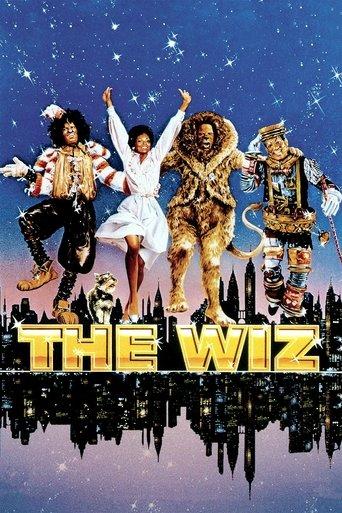
The Wiz
1978
The sourced concerns are substantially offset by delivered value.
What counts as a cash grab?
Commercial extraction prioritized over meaningful consumer or creative value. Profit, popularity, adaptations, sequels, remakes, high budgets, and normal marketing do not count by themselves.
Why?
The Wiz (1978) was a high-budget Motown/Universal adaptation starring Diana Ross and Michael Jackson, whose casting and financing were influenced by Ross's insistence and Motown involvement, and which ultimately underperformed at the box office. Contemporary coverage and archival records document substantial investment in production design, costumes, and a Quincy Jones soundtrack, plus four Academy Award nominations. I found no credible contemporaneous evidence of predatory monetization, deceptive release practices, or pay-to-play consumer tactics surrounding the film's initial release.
- No credible sources document predatory monetization, deceptive pricing, or paywalled content for the 1978 film.
- Contemporary accounts record Diana Ross pressing to be cast and her involvement helping secure financing, showing commercial casting influence.
- The film had a large reported budget (~$23-24M) and did not recoup that sum in reported box office receipts.
View full breakdownHide full breakdown
- Multiple sources and reviews highlight substantial production design, costume work, a Quincy Jones soundtrack, and four Academy Award nominations.
Score factors
| Direction | Factor | Evidence | Impact |
|---|---|---|---|
| Against | Substantial production craft and awards | The film employed notable production designer Tony Walton, enlisted Quincy Jones for the soundtrack, and earned four Academy Award nominations for cinematography, art direction, costume design, and music adaptation.[2][1] | -17 |
| Against | Substantive adaptation and soundtrack | The film adapts the Broadway musical as a contemporary African American reimagining with a motion picture soundtrack produced by Quincy Jones, indicating substantive creative work beyond straight reuse.[1] | -12 |
| For | Star casting influenced financing | Sources state Diana Ross pressed to be cast as Dorothy and her involvement was pivotal in securing studio support and financing for the film adaptation.[3] | +9 |
| For | Budget versus box office | Reported production budgets are in the $23-24 million range while published gross figures show roughly $21 million worldwide, indicating the film underperformed financially.[4][5] | +8 |
| Against | Critical response emphasized design | Contemporary critical coverage was mixed, often criticizing story and casting while praising elaborate production design and costumes, suggesting artistic ambition rather than low-effort reuse.[3][1] | -7 |
| For | No exploitative monetization found | Contemporary reporting, archival production notes, and trade summaries contain no evidence of predatory monetization, premium tie-ins, or deceptive consumer practices tied to the film's theatrical release.[2][1][4] | +5 |
Confidence: High · The conclusion rests on multiple contemporary trade records, archival production notes, and major critical reviews that document casting influence, budget and box office, and substantial production work, while no reliable sources were found alleging predatory monetization or deceptive consumer pract · Researched 2026-08-11
Sources reviewed
- [1]www.tcm.com
- [2]catalog.afi.com
- [3]www.newyorker.com
- [4]www.the-numbers.com
- [5]www.moviefone.com
- [6]www.imdb.com
- [7]www.boxofficemojo.com
- [8]saturation.io
- [9]en.wikipedia.org
- [10]en.wikipedia.org
View 11 more sourcesShow fewer sources
What does the community think?
The AI sees low cash-grab risk. What's your read?
Loading community verdict…