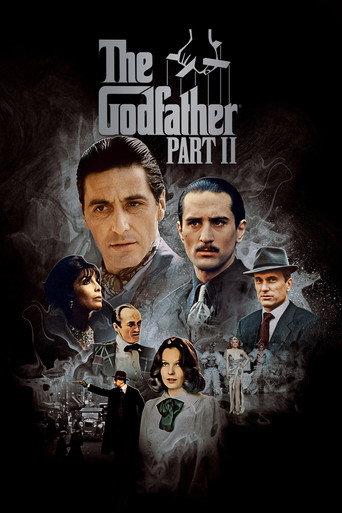
The Godfather Part II
1974
The sourced concerns are substantially offset by delivered value.
What counts as a cash grab?
Commercial extraction prioritized over meaningful consumer or creative value. Profit, popularity, adaptations, sequels, remakes, high budgets, and normal marketing do not count by themselves.
Why?
The Godfather Part II (1974) does not have credible evidence supporting classification as a cash grab. Contemporary production histories and archives show Paramount pushed for a sequel but granted Francis Ford Coppola creative control, the film expanded the narrative with substantial new material for both Vito and Michael Corleone, and production records document large budgets, multiple international locations and notable crew continuity from the first film. The picture received widespread critical acclaim and major awards, which supports substantive artistic and consumer value rather than predatory monetization.
- No sourced evidence of predatory monetization or deceptive release practices was found; studio pressured for a sequel but granted Coppola creative control.
- The film presents substantial new content, including a Vito prequel storyline and an original Michael storyline written for the film.
- Production required significant investment and complex shoots across locations, with key creative personnel returning from the first film.
View full breakdownHide full breakdown
- Critical reception and major awards, including Academy recognition, indicate recognized artistic and consumer value.
Score factors
| Direction | Factor | Evidence | Impact |
|---|---|---|---|
| Against | Substantial new narrative content | The film contains substantial new material, notably the Vito Corleone prequel narrative and an original Michael Corleone storyline written for this motion picture.[1][2] | -19 |
| Against | Production craft and investment | Production histories document a substantial budget increase, multiple international shooting locations and a returning senior creative team, indicating significant production craft and investment.[3][1] | -18 |
| For | Lack of evidence for predatory monetization | Contemporary production notes and histories show studio interest in a sequel but also record Coppola receiving creative control, there is no sourced evidence of predatory monetization or deceptive pricing tied to this release.[4][1] | +15 |
| For | No documented price to value mismatch | Box office and archival reporting indicate the film recouped its higher production costs and was a commercial and critical success, with no contemporaneous reporting of deceptive pricing or consumer complaints as part of release.[1] | +11 |
| Against | Artistic structure and critical recognition | The film uses a complex intercutting of two timelines, undertook notable cinematographic and narrative risk, and won major awards and enduring critical acclaim.[1] | -9 |
Confidence: High · Multiple authoritative contemporaneous and archival sources document production history, narrative authorship and awards; no reliable sources were found indicating predatory monetization or rushed deceptive release practices. · Researched 2026-08-09
Sources reviewed
- [1]en.wikipedia.org
- [2]abcnews.go.com
- [3]catalog.afi.com
- [4]web.library.yale.edu
- [5]catalog.afi.com
- [6]www.loc.gov
- [7]www.imdb.com
- [8]www.imdb.com
- [9]en.wikipedia.org
- [10]en.wikipedia.org
View 13 more sourcesShow fewer sources
- [11]text-message.blogs.archives.gov
- [12]oak2.the-numbers.com
- [13]www.latimes.com
- [14]www.cinefacts.it
- [15]saturation.io
- [16]www.flickle.co
- [17]fr.wikipedia.org
- [18]en.wikipedia.org
- [19]de.wikipedia.org
- [20]bloximages.chicago2.vip.townnews.com
- [21]www.reddit.com
- [22]bibliographie.uni-tuebingen.de
- [23]assets.cambridge.org
What does the community think?
The AI sees low cash-grab risk. What's your read?
Loading community verdict…