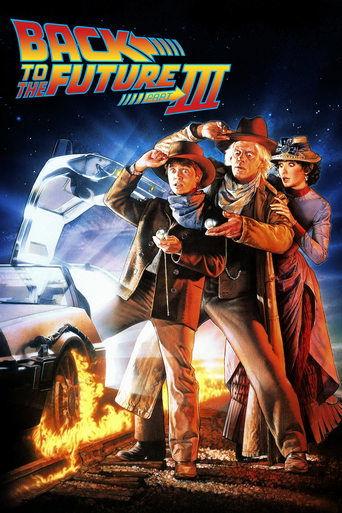
Back to the Future Part III
1990
Insufficient evidence
We did not find enough credible, independent evidence to publish a numeric cash-grab score. Unrated is more honest than a guess.
What counts as a cash grab?
Commercial extraction prioritized over meaningful consumer or creative value. Profit, popularity, adaptations, sequels, remakes, high budgets, and normal marketing do not count by themselves.
Why?
Back to the Future Part III (1990) does not have credible evidence in mainstream reporting of predatory monetization, rushed deceptive release practices, or blatant low-effort reuse. Production records and the franchise site describe deliberate planning, substantial location builds and shoots, and a defined Western story distinct from Parts I and II. Industrial Light & Magic documented technical visual effects work for complex composites. Contemporary major reviews criticized its story choices but did not identify studio exploitation or a price versus value mismatch.
- No reputable reporting found alleging predatory monetization or deceptive release tied to the film.
- Official production notes and franchise documentation describe deliberate planning and substantial set and location work.
- ILM and other production sources document significant technical and VFX effort developed for the film.
View full breakdownHide full breakdown
Score factors
| Direction | Factor | Evidence | Impact |
|---|---|---|---|
| Against | Documented visual effects work | Industrial Light & Magic published details of motion-controlled camera techniques and VFX work created specifically for Back to the Future Part III.[4] | -9 |
| Against | New Western story, sets and locations | Official production notes and encyclopedic records state Part III was developed as a distinct Western finale with extensive set construction and on-location shooting in 1885 Hill Valley/Sonora style environments.[1][2] | -16 |
| Against | Sequenced production and deliberate scheduling | Sources document that material for Parts II and III was developed together and filmed in close sequence with planned hiatuses, indicating a production plan rather than a last-minute cash-driven rush.[1][2] | -8 |
| Against | Contemporary critical reception | Major contemporary reviews criticized the film's narrative and compared its tone to television continuations, but they did not describe the release as a studio cash grab or as exploitative monetization.[5][6][2] | -8 |
| Against | Franchise production notes and release details | The franchise's official site provides production notes, explicit release timing and creative rationale indicating the film was conceived as a planned finale rather than an opportunistic exploitation.[3][1] | -12 |
Confidence: Low · No source-backed commercial-extraction signal was found. · Researched 2026-09-22
Sources reviewed
- [1]www.backtothefuture.com
- [2]en.wikipedia.org
- [3]www.backtothefuture.com
- [4]www.ilm.com
- [5]www.rogerebert.com
- [6]www.latimes.com
- [7]en.wikipedia.org
- [8]wiki.arcsnet.dev
- [9]en.wikipedia.org
- [10]es.wikipedia.org