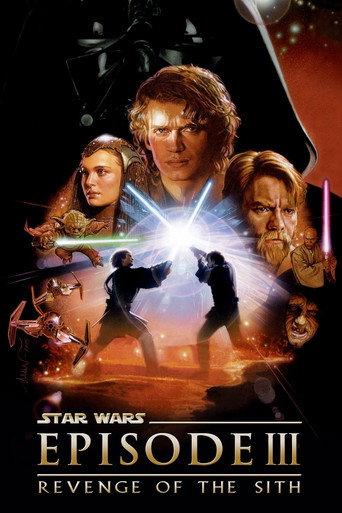
Star Wars: Episode III - Revenge of the Sith
2005
The sourced concerns are substantially offset by delivered value.
What counts as a cash grab?
Commercial extraction prioritized over meaningful consumer or creative value. Profit, popularity, adaptations, sequels, remakes, high budgets, and normal marketing do not count by themselves.
Why?
Public records, contemporaneous reporting and release materials do not show credible evidence that Star Wars: Episode III - Revenge of the Sith was structured as a predatory cash grab. The film documents large investments in effects, score and postproduction and it concluded a long-planned prequel arc. There were extensive merchandising and retailer tie-ins timed to the release, but those are documented licensing and marketing activities rather than deceptive pricing or rushed-release tactics. No authoritative reporting links the title to exploitative monetization practices beyond ordinary franchise merchandising.
- No credible reporting or trade coverage alleges predatory monetization, rushed release, or deceptive pricing tied to the film.
- Production documentation and DVD featurettes record extensive VFX, scores and man-hours, indicating substantial production investment.
- Major merchandising and toy lines were launched in coordination with the film and industry data show a sales spike following the release.
View full breakdownHide full breakdown
- Home-video and DVD releases included extensive extras and commentary, indicating a consumer-friendly post-theatrical package.
Score factors
| Direction | Factor | Evidence | Impact |
|---|---|---|---|
| Against | Production craft and VFX investment | DVD featurettes and production coverage document extensive visual effects work and tens of thousands of man-hours on complex sequences such as the Mustafar duel, indicating significant production effort and cost.[1][2] | -18 |
| Against | Substantive new narrative content | The film provides original, major story events that conclude the prequel arc, including Order 66 and Anakin Skywalker’s transformation, showing substantive new creative content beyond brand reuse.[4][3] | -16 |
| Against | Major studio investment and commercial success | Reported production budget is around $113 million and reported worldwide gross is roughly $848-850 million, showing major studio investment and very strong consumer demand rather than a low-effort, low-cost exploitation.[5][6] | -14 |
| For | Extensive merchandising and toy tie-ins | Lucasfilm coordinated major Hasbro and LEGO toy product lines and retailer promotions timed to the film, and industry data reported Star Wars toys became the top-selling toy property after the movie opened.[7][8][9] | +9 |
| Against | Robust home-video package and extras | The November 2005 two-disc DVD release included a 79-minute making-of documentary, audio commentary tracks, deleted scenes and other featurettes, indicating a substantial consumer-oriented home release.[1][11][10] | -9 |
| Against | Critical reception noted both strengths and flaws | Contemporary critics generally praised the film's darker tone and conclusion of the saga while also criticizing heavy CGI, some clunky dialogue and uneven acting, which are aesthetic critiques not proof of monetization-driven exploitation.[13][14][12] | -4 |
Confidence: High · Evidence is drawn from contemporaneous reporting, major trade and press outlets, production materials and industry sales statements; internal licensing financial details remain proprietary which limits direct assessment of studio intent. · Researched 2026-07-24
Sources reviewed
- [1]archive.thedigitalbits.com
- [2]insidepulse.com
- [3]en.wikipedia.org
- [4]www.starwars.com
- [5]www.boxofficemojo.com
- [6]www.the-numbers.com
- [7]www.webwire.com
- [8]www.webwire.com
- [9]investor.hasbro.com
- [10]www.dvdreview.com
View 66 more sourcesShow fewer sources
- [11]www.spokesman.com
- [12]www.rottentomatoes.com
- [13]www.rogerebert.com
- [14]www.theguardian.com
- [15]www.metacritic.com
- [16]www.rottentomatoes.com
- [17]newsroom.hasbro.com
- [18]corp.hasbro.com
- [19]en.wikipedia.org
- [20]www.imdb.com
- [21]www.starwars.com
- [22]www.vanityfair.com
- [23]en.wikipedia.org
- [24]en.wikipedia.org
- [25]corp.hasbro.com
- [26]en.wikipedia.org
- [27]newsroom.hasbro.com
- [28]en.wikipedia.org
- [29]newsroom.hasbro.com
- [30]cgvfx.com
- [31]www.starwars.com
- [32]www.rogerebert.com
- [33]www.rogerebert.com
- [34]www.theguardian.com
- [35]vi.web-platforms-vi.nyti.nyt.net
- [36]editorial.rottentomatoes.com
- [37]www.gamespot.com
- [38]www.rogerebert.com
- [39]www.imdb.com
- [40]www.reddit.com
- [41]www.steelfrogblog.com
- [42]www.reddit.com
- [43]www.reddit.com
- [44]www.areadvd.de
- [45]www.dvdjournal.com
- [46]www.dvdtalk.com
- [47]report.dvd365.net
- [48]chud.com
- [49]www.eyeforfilm.co.uk
- [50]www.hometheaterforum.com
- [51]freedreampictures.com
- [52]archives.nd.edu
- [53]en.wikipedia.org
- [54]en.wikipedia.org
- [55]images.bestbuy.com
- [56]en.wikipedia.org
- [57]www.videomaker.com
- [58]tvtropes.org
- [59]bloximages.newyork1.vip.townnews.com
- [60]s3.amazonaws.com
- [61]medium.com
- [62]forum.blu-ray.com
- [63]theurbanherald.com
- [64]forum.blu-ray.com
- [65]memory-alpha.fandom.com
- [66]podscripts.co
- [67]www.digitaltrends.com
- [68]darkskiesfilm.com
- [69]www.reddit.com
- [70]media.truewestmagazine.com
- [71]www.npdtv.com
- [72]www.reddit.com
- [73]perfdamage.buzzsprout.com
- [74]www.reddit.com
- [75]www.reddit.com
- [76]www.reddit.com
What does the community think?
The AI sees low cash-grab risk. What's your read?
Loading community verdict…