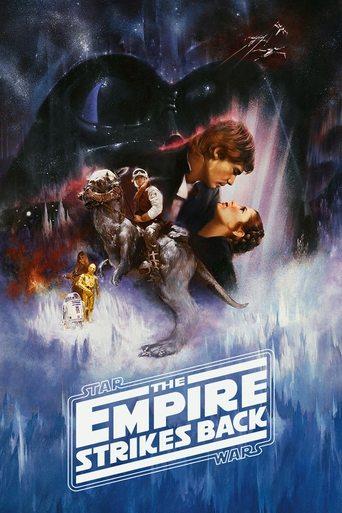
The Empire Strikes Back
1980
The sourced concerns are substantially offset by delivered value.
What counts as a cash grab?
Commercial extraction prioritized over meaningful consumer or creative value. Profit, popularity, adaptations, sequels, remakes, high budgets, and normal marketing do not count by themselves.
Why?
The Empire Strikes Back, released May 21, 1980, shows strong evidence of substantial new creative and technical investment, including original characters, ambitious visual effects, and industry recognition, while also arriving amid a major Star Wars merchandising push. Museum and industry histories document large licensed toy and product programs that generated significant revenue and helped sustain Lucasfilm, but I found no credible sources alleging predatory monetization, rushed or deceptive release practices, or low-effort reuse that would meet the definition of a cash grab.
- No credible sources document predatory monetization, deceptive release tactics, or rushed low-effort production for the film.
- The film was accompanied by a large, established Star Wars merchandising program that produced significant revenue around 1980.
- Studio and industry histories indicate merchandising helped finance sequels and supported Lucasfilm, but that is not proof of exploitation of this film itself.
View full breakdownHide full breakdown
- The production delivered substantial new content, technical innovation, and Academy recognition, contradicting a low-effort cash-grab characterization.
Score factors
| Direction | Factor | Evidence | Impact |
|---|---|---|---|
| Against | Significant production craft and industry recognition | The film received a Special Achievement Academy Award for Visual Effects and won Best Sound, reflecting substantial technical and craft investment by Industrial Light & Magic and collaborators.[1] | -18 |
| Against | Introduced durable characters and narrative depth | The Empire Strikes Back introduced enduring characters such as Yoda, Lando Calrissian, and Boba Fett and expanded the trilogy's narrative stakes and settings.[1][3] | -16 |
| For | Merchandise revenue supported the franchise finances | Multiple industry accounts state that Star Wars merchandising success generated revenue that helped finance The Empire Strikes Back and later installments.[2][4] | +13 |
| Against | Enduring critical acclaim and consumer reception | Although some contemporary critics were mixed, the film has an enduring reputation for quality among critics and audiences and scores highly on modern aggregator sites.[5][6] | -11 |
| For | Extensive merchandising and licensing | Contemporary histories document a major global merchandising program tied to The Empire Strikes Back, including toys, playsets and licensed products sold in 1980.[7][2] | +9 |
Confidence: High · Assessment is based on primary studio retrospectives, museum/industry histories, contemporary reviews and Academy records that detail both the large merchandising program and the film's significant creative and technical investments; internal studio accounting linking decisions directly to merchandi · Researched 2026-08-09
Sources reviewed
- [1]www.lucasfilm.com
- [2]www.denofgeek.com
- [3]www.starwars.com
- [4]www.forbes.com
- [5]www.starwars.com
- [6]www.rottentomatoes.com
- [7]airandspace.si.edu
- [8]en.wikipedia.org
- [9]www.starwars.com
- [10]www.starwars.com
View 28 more sourcesShow fewer sources
- [11]en.wikipedia.org
- [12]content.time.com
- [13]en.wikipedia.org
- [14]en.wikipedia.org
- [15]www.lucasfilm.com
- [16]en.wikipedia.org
- [17]en.wikipedia.org
- [18]www.theguardian.com
- [19]www.lucasfilm.com
- [20]starwars.fandom.com
- [21]www.cbsnews.com
- [22]www.erudit.org
- [23]ttabvue.uspto.gov
- [24]www.reddit.com
- [25]citeseerx.ist.psu.edu
- [26]www.oscars.org
- [27]awardsdatabase.oscars.org
- [28]www.rottentomatoes.com
- [29]vi.web-platforms-vi.nyti.nyt.net
- [30]en.wikipedia.org
- [31]www.oscars.org
- [32]www.imdb.com
- [33]www.starwars.com
- [34]en.wikipedia.org
- [35]www.oscars.org
- [36]oscars.fandom.com
- [37]www.oscars.org
- [38]www.reddit.com
What does the community think?
The AI sees low cash-grab risk. What's your read?
Loading community verdict…