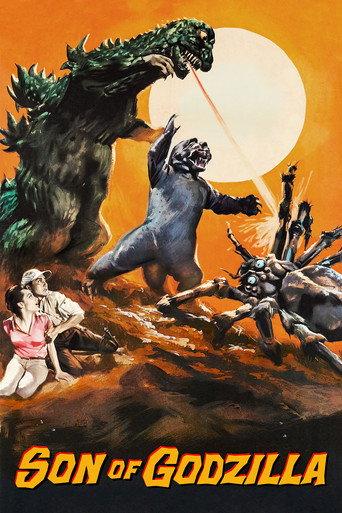
Son of Godzilla
1967
The sourced concerns are substantially offset by delivered value.
What counts as a cash grab?
Commercial extraction prioritized over meaningful consumer or creative value. Profit, popularity, adaptations, sequels, remakes, high budgets, and normal marketing do not count by themselves.
Why?
Son of Godzilla (1967) is a Toho Showa-era kaiju film directed by Jun Fukuda that introduces Godzilla's son Minilla and features practical suitmation effects supervised by Eiji Tsuburaya team members. Primary sources and retrospective coverage describe deliberate creative choices around the father-child relationship and practical special-effects work rather than explicit predatory monetization, deceptive release practices, or documented rushed/low-effort reuse intended to exploit consumers.
- No credible sources document predatory monetization or deceptive release practices for Son of Godzilla.
- Primary production accounts emphasize directorial intent to explore a father‑son relationship and practical special effects work.
- Contemporary and retrospective coverage treats Minilla as a creative choice, with some notes about appealing to younger audiences but not explicit exploitation.
View full breakdownHide full breakdown
- No reliable evidence found of substantial stock-footage recycling or explicit low-effort content reuse presented as new for this title.
Score factors
| Direction | Factor | Evidence | Impact |
|---|---|---|---|
| Against | Practical special effects and production work | The film used suitmation and special effects supervised by members of Eiji Tsuburaya's effects team, indicating substantive practical-effects work rather than obvious low-effort reuse.[1] | -14 |
| For | No documented low-effort stock reuse for this title | Retrospectives note Toho economized on other later films by reusing shots, but I found no reliable source claiming Son of Godzilla itself was primarily assembled from recycled sequences.[3][1] | +8 |
| Against | Creative intent behind Minilla | Director Jun Fukuda and production accounts describe Minilla as a deliberate narrative choice to explore a father‑son relationship rather than an explicitly documented cash‑driven gimmick.[1][2] | -6 |
| For | Producer noted series shifting toward younger audiences | Retrospective analysis of the Showa Godzilla series observes producer Tomoyuki Tanaka oversaw a creative evolution toward younger audiences, a contextual note but not direct proof of exploitative intent for this film.[4][2] | +5 |
| For | No predatory monetization evidence | I found no primary or reputable secondary sources documenting exploitative pricing, predatory merchandising strategies, or deceptive sales practices tied to the film's original release.[1] | +3 |
Confidence: High · Available reputable production histories and retrospective coverage specifically discuss the film's creative choices and effects work while failing to produce contemporaneous evidence of predatory monetization or deceptive release practices. · Researched 2026-10-14
Sources reviewed
- [1]en.wikipedia.org
- [2]en.wikipedia.org
- [3]www.criterion.com
- [4]www.criterion.com
- [5]www.criterion.com
- [6]en.wikipedia.org
- [7]es.wikipedia.org
- [8]www.criterion.com
- [9]en.wikipedia.org
- [10]www.rogerebert.com
View 9 more sourcesShow fewer sources
What does the community think?
The AI sees low cash-grab risk. What's your read?
Loading community verdict…