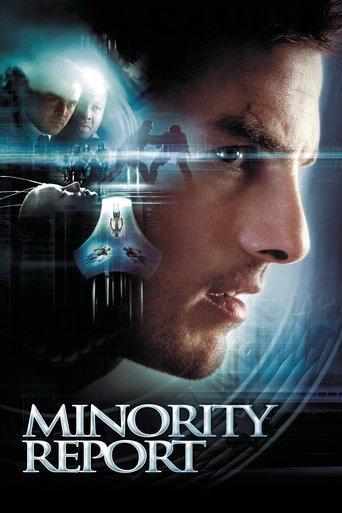
Minority Report
2002
The sourced concerns are substantially offset by delivered value.
What counts as a cash grab?
Commercial extraction prioritized over meaningful consumer or creative value. Profit, popularity, adaptations, sequels, remakes, high budgets, and normal marketing do not count by themselves.
Why?
Minority Report is a 2002 Steven Spielberg theatrical film with a reported $102 million production budget and major studio backing, starring Tom Cruise and using extensive visual effects and production design to realize an imagined 2054. The title spawned standard commercial tie-ins including an officially licensed Activision video game and a soundtrack, however contemporary reporting and reviews emphasize substantial production craft and critical acclaim. I found no credible sources that document predatory monetization, deceptive release practices, or deliberate low-effort reuse intended primarily to extract consumer money.
- Large-scale production investment and top creative talent indicate substantial production craft and artistic investment.
- Contemporary coverage documents expert-driven design and extensive visual effects work, supporting genuine technical risk and effort.
- Official commercial tie-ins exist, notably an Activision-licensed video game announced before theatrical release, consistent with cross-media monetization.
View full breakdownHide full breakdown
- The licensed video game received negative reviews, showing at least one low-quality ancillary product, but no evidence of predatory pricing or rushed theatrical release was found.
Score factors
| Direction | Factor | Evidence | Impact |
|---|---|---|---|
| Against | Production scale and major creative team | The film lists a production budget of approximately $102 million and was directed by Steven Spielberg with Tom Cruise starring, indicating significant financial and creative investment.[1] | -18 |
| Against | Critical acclaim and lasting recognition | Contemporary and retrospective reviews were broadly positive, the film holds high aggregator scores, and critics singled out its design, effects, and storytelling as strengths.[2][3] | -15 |
| For | Tie-in game received negative contemporary reviews | Contemporary reviews criticized the licensed video game as an uneven, poor-quality licensed property, with GameSpot describing it as 'just another bad licensed-property video game'.[4] | +15 |
| For | Official licensed video game announced pre-release | An officially licensed video game, Minority Report: Everybody Runs, was announced before the film's theatrical release and published by Activision in 2002.[5] | +11 |
| Against | Extensive visual effects and expert-driven preproduction | Reporting and production notes describe Spielberg convening experts to prototype future technologies, extensive VFX work, and DVD featurettes documenting visual effects breakdowns.[8][7][6] | -8 |
| For | No credible evidence of predatory monetization or rushed rel | I found no credible reporting or documentation alleging predatory pricing, deceptive release practices, or that the theatrical release was rushed to extract revenue.[1][9] | +5 |
Confidence: High · Contemporary production reporting, studio and trade announcements, and multiple independent reviews provide strong public evidence about production scale, technical work, and ancillary products, the remaining gap is internal intent or undisclosed financial practices. · Researched 2026-08-02
Sources reviewed
- [1]www.boxofficemojo.com
- [2]www.rottentomatoes.com
- [3]saturation.io
- [4]www.gamespot.com
- [5]www.gamespot.com
- [6]www.rogerebert.com
- [7]www.latimes.com
- [8]en.wikipedia.org
- [9]www.latimes.com
- [10]www.the-numbers.com
View 41 more sourcesShow fewer sources
- [11]www.imdb.com
- [12]letterboxd.com
- [13]en.wikipedia.org
- [14]m.imdb.com
- [15]www.cbsnews.com
- [16]pages.cs.wisc.edu
- [17]en.wikipedia.org
- [18]en.wikipedia.org
- [19]www.reddit.com
- [20]cdn.loc.gov
- [21]en.wikipedia.org
- [22]en.wikipedia.org
- [23]en.wikipedia.org
- [24]en.wikipedia.org
- [25]www.imdb.com
- [26]www.gamespot.com
- [27]en.wikipedia.org
- [28]en.wikipedia.org
- [29]minorityreport.fandom.com
- [30]en.wikipedia.org
- [31]openlibrary.org
- [32]www.gamesdatabase.org
- [33]www.gamespot.com
- [34]www.theguardian.com
- [35]www.mobygames.com
- [36]filmmusic.com
- [37]www.computinghistory.org.uk
- [38]www.teachingwithfilm.com
- [39]ptgmedia.pearsoncmg.com
- [40]www.reddit.com
- [41]unglueit-files.s3.amazonaws.com
- [42]citeseerx.ist.psu.edu
- [43]core.ac.uk
- [44]www1.nebraskafood.org
- [45]www.reddit.com
- [46]www.reddit.com
- [47]www.reddit.com
- [48]www.reddit.com
- [49]www.reddit.com
- [50]www.reddit.com
- [51]www.reddit.com
What does the community think?
The AI sees low cash-grab risk. What's your read?
Loading community verdict…