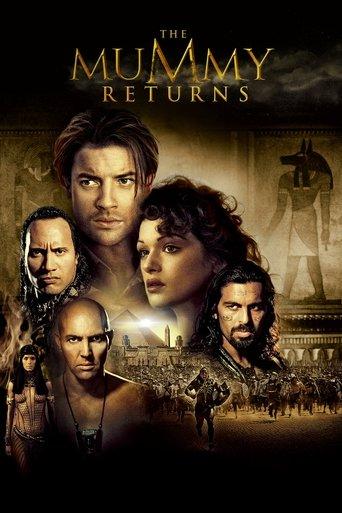
The Mummy Returns
2001
There are sourced concerns, but the case is limited.
What counts as a cash grab?
Commercial extraction prioritized over meaningful consumer or creative value. Profit, popularity, adaptations, sequels, remakes, high budgets, and normal marketing do not count by themselves.
Why?
The Mummy Returns was released May 4, 2001 as a high-budget Universal sequel that opened with a then-record weekend and later grossed roughly $430-443 million worldwide on a reported $98 million production budget. Contemporary critics praised its action and visual spectacle while many also faulted its thin story and conspicuous reliance on effects, notably the much-derided Scorpion King CGI. The film spawned quick commercial tie-ins and a 2002 spin-off centered on the Scorpion King, showing clear studio focus on franchise exploitation alongside significant VFX investment.
- Huge commercial opening and strong worldwide gross indicate pronounced commercial focus.
- Major critics praised spectacle but criticized story and excessive special effects.
- The Scorpion King character’s cameo led to a rapid 2002 spin-off, signaling brand extraction.
View full breakdownHide full breakdown
- Documented heavy VFX budget and production work provide substantive production craft evidence.
Score factors
| Direction | Factor | Evidence | Impact |
|---|---|---|---|
| For | Box office and release timing | The film opened May 4, 2001 with a record opening weekend and ultimately grossed roughly $433-443 million worldwide against a reported $98 million production budget, showing strong commercial positioning.[2][3] | +19 |
| Against | Large VFX spend and production effort | The production reported a roughly $98 million budget and engaged substantial visual effects work and post-production resources, with trade coverage describing ambitious VFX efforts that mitigates claims of purely low-effort extraction.[2][4] | -16 |
| For | Critical complaints about story and effects | Roger Ebert and other contemporary critics said the sequel prioritized mindless special effects over story and character, criticizing the film’s narrative thinness and reliance on spectacle.[5][6] | +15 |
| For | Widely noted poor Scorpion King CGI | The Scorpion King digital effect was widely criticized as awkward and has been repeatedly cited in retrospectives as an example of flawed CGI, undermining perceived technical polish in a commercially driven sequel.[1][7] | +13 |
| For | Rapid spin-off from minor role | A brief appearance by the Scorpion King in this film was developed into a dedicated spin-off, The Scorpion King, released in 2002, indicating extraction of a minor property for additional commercial products.[8][1] | +12 |
| For | Tie-ins and ancillary products | The Mummy Returns generated ancillary products including video games and a planned home video release, consistent with broader franchise monetization through tie-ins.[1] | +10 |
| Against | Audience-friendly spectacle | Contemporary reviewers such as the Los Angeles Times and Variety noted nonstop action and visual spectacle, indicating genuine consumer entertainment value despite narrative criticisms.[3][1] | -8 |
Confidence: Medium · Evidence includes authoritative contemporary reviews, trade coverage, box office and documented spin-off production, however direct documentation of predatory pricing or intentionally deceptive release practices is lacking so some extraction inferences remain interpretive. · Researched 2026-08-13
Sources reviewed
- [1]en.wikipedia.org
- [2]www.boxofficemojo.com
- [3]www.latimes.com
- [4]www.cgw.com
- [5]www.rogerebert.com
- [6]www.washingtonpost.com
- [7]outlawvern.com
- [8]en.wikipedia.org
- [9]www.the-numbers.com
- [10]m.imdb.com
View 32 more sourcesShow fewer sources
- [11]boxoffice.filmdb.co.uk
- [12]oak2.the-numbers.com
- [13]en.wikipedia.org
- [14]letterboxd.com
- [15]abcnews.go.com
- [16]saturation.io
- [17]www.imdb.com
- [18]en.wikipedia.org
- [19]www.hollywood.com
- [20]www.reddit.com
- [21]en.wikipedia.org
- [22]www.reddit.com
- [23]it.wikipedia.org
- [24]www.reddit.com
- [25]www.reddit.com
- [26]www.reddit.com
- [27]www.rogerebert.com
- [28]www.youtube.com
- [29]universalmonsters.fandom.com
- [30]udspace.udel.edu
- [31]gpedia.com
- [32]dailyiowan.lib.uiowa.edu
- [33]asnepal.com
- [34]www.rogerebert.com
- [35]www.reddit.com
- [36]www.reddit.com
- [37]archives.csusm.edu
- [38]assets-global.website-files.com
- [39]www.reddit.com
- [40]digital.opal-libraries.org
- [41]everything.explained.today
- [42]www.reddit.com
What does the community think?
The AI found some cash-grab signs. What's your read?
Loading community verdict…