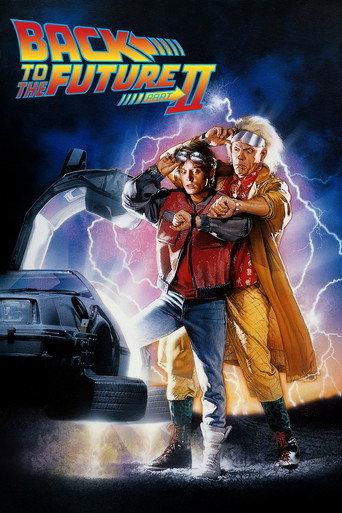
Back to the Future Part II
1989
The sourced concerns are substantially offset by delivered value.
What counts as a cash grab?
Commercial extraction prioritized over meaningful consumer or creative value. Profit, popularity, adaptations, sequels, remakes, high budgets, and normal marketing do not count by themselves.
Why?
Back to the Future Part II (1989) shows substantial evidence of demanding production work, including pioneering visual effects, complex stunt choreography, and intensive postproduction, while contemporaneous reporting and participant comments also document a tight schedule to meet a Thanksgiving release and studio decisions about marketing it as a standalone entry rather than an explicitly promoted second act of a planned trilogy. Reporting finds significant merchandising interest around the film but does not produce clear evidence of predatory pricing or deliberately deceptive release practices.
- Multiple production sources document advanced, time consuming visual effects work and original set and prop design.
- Crew and cast statements describe a compressed schedule to hit the Thanksgiving 1989 release date, with effects finishing very close to delivery.
- Bob Gale reported studio pressure about how the film was marketed, preferring a three part trilogy label while the studio marketed Part II as a complete film.
View full breakdownHide full breakdown
- There was strong merchandising demand and public confusion around the hoverboard, but no sourced evidence of predatory monetization or deceptive pricing.
Score factors
| Direction | Factor | Evidence | Impact |
|---|---|---|---|
| Against | High technical and practical craft | Visual effects supervisors and industry coverage describe complex ILM effects, miniature work, early digital wire removal and extensive art department design for the film's 2015 sequences.[2][1] | -18 |
| Against | Notable new content and design | The film introduced new set designs, the hoverboard concept and futurist production design elements that required original art department and effects work.[1] | -16 |
| For | Tight schedule to meet release | Cast and production notes report night shoots to accommodate Michael J. Fox's TV schedule and effects work completed very close to film printing to meet the Thanksgiving 1989 release.[3][4] | +8 |
| For | Strong merchandising demand around the hoverboard | Contemporaneous accounts record a public uproar and consumer interest tied to hoverboard merchandising and attendant confusion, but these accounts do not document predatory monetization or deceptive pricing.[5] | +8 |
| Against | Dangerous, complex stunts | Reporting documents complex hoverboard stunts and a near-fatal stunt accident during production, indicating real safety risk and ambitious stunt work.[6][7] | -7 |
| For | Studio preferred standalone marketing | Bob Gale said Universal wanted to market Part II as a complete movie rather than explicitly as the second of a three part story, which he felt misrepresented the filmmakers' intent.[8] | +6 |
Confidence: High · Contemporary interviews, production notes and independent reporting provide strong, specific evidence about effects work, tight scheduling and marketing choices, while primary sources and coverage do not show direct proof of predatory monetization or deceptive pricing practices. · Researched 2026-08-30
Sources reviewed
- [1]www.the-independent.com
- [2]pdfcoffee.com
- [3]www.backtothefuture.com
- [4]cyberlonging.com
- [5]www.cinema.com.my
- [6]www.slashfilm.com
- [7]en.wikipedia.org
- [8]www.zidz.com
- [9]en.wikipedia.org
- [10]www.inkl.com
View 7 more sourcesShow fewer sources
What does the community think?
The AI sees low cash-grab risk. What's your read?
Loading community verdict…