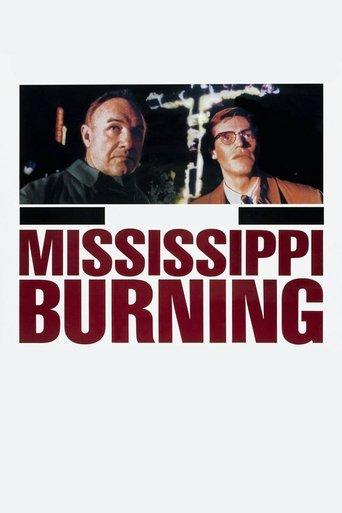
Mississippi Burning
1988
The sourced concerns are substantially offset by delivered value.
What counts as a cash grab?
Commercial extraction prioritized over meaningful consumer or creative value. Profit, popularity, adaptations, sequels, remakes, high budgets, and normal marketing do not count by themselves.
Why?
Mississippi Burning (1988) was a theatrically released Alan Parker film produced for about $15 million and grossing roughly $34.6 million, it received major awards recognition and sustained critical debate over its historical representation of the 1964 murders of Chaney Goodman and Schwerner. Contemporary and later critics praised craft while some journalists and scholars criticized the film for sidelining Black agency in the story, there is no sourced evidence of predatory monetization, deceptive release tactics, or cheap reuse indicative of a cash grab.
- Box office and budget show modest commercial success but not extraordinary monetization tactics.
- Contemporary acclaim and awards point to substantial production and craft investment.
- Scholars and critics document historical and representational controversies, not commercial exploitation.
View full breakdownHide full breakdown
- No sourced reporting found of predatory pricing, deceptive release, or low-effort reuse.
Score factors
| Direction | Factor | Evidence | Impact |
|---|---|---|---|
| Against | Production craft and industry recognition | The film was directed by Alan Parker, featured major actors and won the Academy Award for Best Cinematography while receiving multiple nominations, supporting evidence of significant production craft.[1] | -16 |
| Against | Substantive new content and creative risk | The screenplay is a dramatized account based on the 1964 FBI investigation, principal photography on location took place, and the film engaged with difficult material indicating substantive creative work.[1] | -14 |
| For | Historical and representational controversy | Journalists and scholars criticized the film for relegating Black people to the background of a story about their own oppression, a content controversy rather than a monetization or low-effort reuse accusation.[2] | +13 |
| For | No evidence of predatory monetization | Searched production reporting and reviews do not show predatory monetization schemes, deceptive release practices, or pay-with-minimal-new-content strategies for this title.[1] | +10 |
| Against | Commercial performance | The film had a reported production budget of $15 million and domestic gross of about $34.6 million, indicating modest commercial success without evidence of extraordinary monetization practices.[1][3] | -9 |
Confidence: High · Available production budgets, box office records, awards history, and scholarly criticism provide direct, reputable reporting on both commercial performance and representational controversies, with no sourced signals of exploitative monetization found. · Researched 2026-10-08
Sources reviewed
- [1]en.wikipedia.org
- [2]butler.elsevierpure.com
- [3]filmdb.co.uk
- [4]www.imdb.com
- [5]please.untaint.us
- [6]offline.goud.so
- [7]boxofficewatch.com
- [8]browse.zim.carpocratian.org
- [9]kiwix.drnathanhutchins.com
- [10]levantado.ddns.net
View 9 more sourcesShow fewer sources
- [11]cinegraph.org
- [12]www.mymoviescripts.com
- [13]www.imdb.com
- [14]www.olps.co.za
- [15]zh.wikipedia.org
- [16]es.wikipedia.org
- [17]de.wikipedia.org
- [18]en.wikipedia.org
- [19]dl.tufts.edu
What does the community think?
The AI sees low cash-grab risk. What's your read?
Loading community verdict…