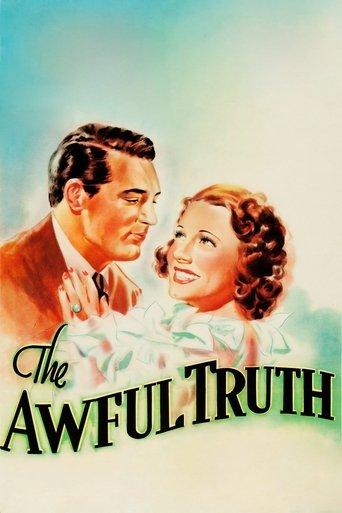
The Awful Truth
1937
The sourced concerns are substantially offset by delivered value.
What counts as a cash grab?
Commercial extraction prioritized over meaningful consumer or creative value. Profit, popularity, adaptations, sequels, remakes, high budgets, and normal marketing do not count by themselves.
Why?
The Awful Truth (1937) shows strong evidence of being a carefully made studio comedy rather than a commercial extraction. Contemporary and retrospective sources record critical acclaim, six Academy Award nominations and a Best Director win for Leo McCarey, documented improvisational direction, and lasting recognition by institutions including AFI and Criterion. I found no credible contemporaneous or modern evidence of predatory monetization, rushed deceptive release practices, or explicit price/value exploitation tied to this specific release.
- Contemporary reviews and later criticism praise the film’s direction, performances, and improvisational craft.
- The film earned six Academy Award nominations and won Best Director, indicating industry recognition of quality.
- Major film institutions and restorers (AFI, Criterion, TCM) treat the film as a classic and preserve/distribute it.
View full breakdownHide full breakdown
- No sourced evidence was found alleging predatory monetization, deceptive release, or rushed low-effort reuse.
Score factors
| Direction | Factor | Evidence | Impact |
|---|---|---|---|
| Against | Industry awards and nominations | The film received six Academy Award nominations and Leo McCarey won Best Director for the 1937 release.[1][2] | -18 |
| For | No credible monetization/exploitation evidence found | Searches of production reporting and institutional coverage revealed no credible allegations of predatory monetization, deceptive release, or deliberate low-effort brand exploitation for the 1937 film.[2][1] | +18 |
| Against | Improvisational/directorial approach | Sources note McCarey’s improvisational methods on set and the film’s substantial crafted physical comedy rather than low-effort reuse.[4][3] | -16 |
| Against | Critical and historical praise | Contemporary reviews and later critics describe the film as a defining screwball comedy with notable physical comedy and directorial inventiveness.[6][7] | -9 |
| Against | Preservation and continued distribution | The film is preserved, distributed, and curated by major institutions and distributors including Criterion, MoMA, AFI, and Columbia/Sony, indicating ongoing cultural value.[3][5] | -9 |
Confidence: High · Multiple reliable contemporary and retrospective sources document production methods, awards, critical reception, and institutional preservation, and no sources indicate extraction or predatory monetization specific to this 1937 release. · Researched 2026-10-31
Sources reviewed
- [1]catalog.afi.com
- [2]en.wikipedia.org
- [3]www.criterion.com
- [4]www.carygrant.com
- [5]www.sonypictures.com
- [6]www.tcm.com
- [7]www.tcm.com
- [8]www.rottentomatoes.com
- [9]www.imdb.com
- [10]www.moma.org
View 13 more sourcesShow fewer sources
- [11]afisilver.afi.com
- [12]countycat.mcfls.org
- [13]www.metacritic.com
- [14]torontofilmsociety.com
- [15]uclamediascapearchive.erraticplay.com
- [16]www.siskelfilmcenter.org
- [17]www.moma.org
- [18]en.wikipedia.org
- [19]movingimage.org
- [20]en.wikipedia.org
- [21]festival.ilcinemaritrovato.it
- [22]en.wikipedia.org
- [23]en.wikipedia.org
What does the community think?
The AI sees low cash-grab risk. What's your read?
Loading community verdict…