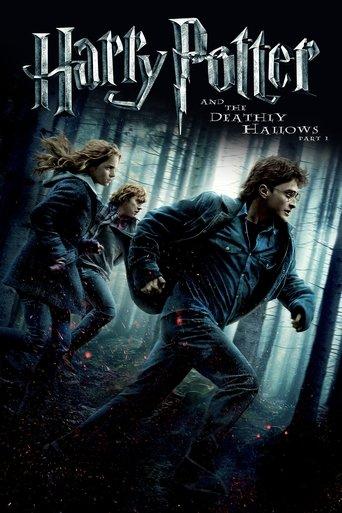
Harry Potter and the Deathly Hallows: Part 1
2010
The sourced concerns are substantially offset by delivered value.
What counts as a cash grab?
Commercial extraction prioritized over meaningful consumer or creative value. Profit, popularity, adaptations, sequels, remakes, high budgets, and normal marketing do not count by themselves.
Why?
Harry Potter and the Deathly Hallows: Part 1 was announced in March 2008 as the first of two cinematic parts, a studio decision that prompted contemporaneous debate about whether splitting the final book was commercially driven. Critics and commentators described the two-part split as a potential cash grab, while studio executives and producers publicly defended the choice as necessary to do justice to the material. The film received substantial production investment, was filmed back-to-back with Part 2, and earned major industry nominations for visual effects and art direction.
- Warner Bros announced in March 2008 that Deathly Hallows would be split into two films, prompting immediate debate about motive.
- Multiple commentators and outlets later described the split and the two-release plan as a cash grab.
- Producers and executives publicly framed the split as a creative decision to preserve the book's material.
View full breakdownHide full breakdown
- The production ran back-to-back with Part 2 and the film received Academy and BAFTA nominations, indicating significant production effort.
Score factors
| Direction | Factor | Evidence | Impact |
|---|---|---|---|
| Against | Production scale and industry recognition | The film was shot back-to-back with Part 2, involved extensive location and effects work, and received Academy Award nominations for visual effects and art direction as well as BAFTA nominations.[1][4][5] | -18 |
| For | Two-part split announced | Warner Bros announced on March 13, 2008 that Deathly Hallows would be split into two films, the studio saying the format would better serve the book's material.[2][3] | +15 |
| Against | Producer and studio statements | Studio executives and producers publicly defended the split as a creative imperative and said the extra runtime was necessary to 'do justice' to the book and characters.[2][1] | -14 |
| For | Public and critical perception of cash grab | Commentators and opinion pieces, including Forbes and other outlets, explicitly described the decision to split the finale as a cash grab and linked it to a broader industry trend.[6][3] | +8 |
Confidence: Medium · Contemporaneous studio statements and major press coverage are available and the film's production and award nominations are well documented, however there is no direct studio admission of predatory monetization or pricing practices, the 'cash grab' view rests largely on critical commentary and indu · Researched 2026-09-07
Sources reviewed
- [1]en.wikipedia.org
- [2]www.latimes.com
- [3]editorial.rottentomatoes.com
- [4]www.oscars.org
- [5]www.bafta.org
- [6]www.forbes.com
- [7]en.wikipedia.org
- [8]medium.com
- [9]ponderworthy.com
- [10]www.wikizero.org
View 31 more sourcesShow fewer sources
- [11]saturation.io
- [12]saturation.io
- [13]www.buzzverdict.com
- [14]elearning.asc.edu.ag
- [15]flickbait.wordpress.com
- [16]time.com
- [17]whysoblu.com
- [18]geeksandgamers.com
- [19]en.wikipedia.org
- [20]www.reddit.com
- [21]www.reddit.com
- [22]www.reddit.com
- [23]www.oscars.org
- [24]awardsdatabase.oscars.org
- [25]awardsdatabase.oscars.org
- [26]www.imdb.com
- [27]digitalcollections.oscars.org
- [28]en.wikipedia.org
- [29]static.bafta.org
- [30]awardsdatabase.oscars.org
- [31]awardsdatabase.oscars.org
- [32]www.oscars.org
- [33]press.oscars.org
- [34]digitalcollections.oscars.org
- [35]www.oscars.org
- [36]static.bafta.org
- [37]en.wikipedia.org
- [38]en.wikipedia.org
- [39]womensmediacenter.com
- [40]en.wikipedia.org
- [41]en.wikipedia.org
What does the community think?
The AI sees low cash-grab risk. What's your read?
Loading community verdict…