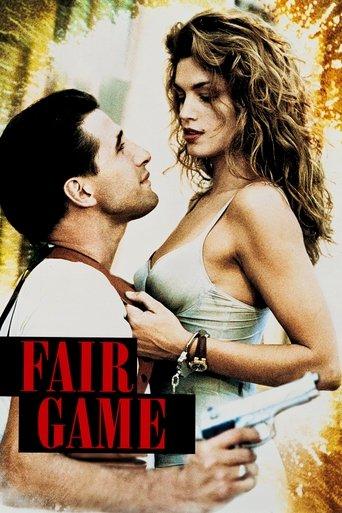
Fair Game
1995
The sourced concerns are substantially offset by delivered value.
What counts as a cash grab?
Commercial extraction prioritized over meaningful consumer or creative value. Profit, popularity, adaptations, sequels, remakes, high budgets, and normal marketing do not count by themselves.
Why?
Fair Game (1995) is a Joel Silver produced action thriller starring Cindy Crawford and William Baldwin, adapted from a Paula Gosling novel. Contemporary reviews and trade records show it was a wide theatrical release with a reported $50 million production budget and roughly $11.5 million worldwide gross. Critics repeatedly described the picture as designed to showcase Crawford, and many reviews said the film felt hurried or trimmed, while production credits and stunts indicate substantial financial and technical investment rather than an obviously low-effort reuse.
- Contemporary reviews explicitly characterized the film as made to showcase supermodel Cindy Crawford.
- Critics described the movie as trimmed and hurried, suggesting rushed editing or release.
- Production records show a $50 million budget and Joel Silver/Silver Pictures involvement, indicating significant production investment.
View full breakdownHide full breakdown
- No reporting was found of predatory monetization, deceptive pricing, or unusual commercial tactics tied to the title.
Score factors
| Direction | Factor | Evidence | Impact |
|---|---|---|---|
| Against | Production investment | Box office and trade records list a $50 million production budget, Joel Silver/Silver Pictures as producer, and critics noted substantial stunt and action work, showing significant financial and technical investment.[3][2][1] | -15 |
| For | Brand exploitation | Multiple contemporary reviews state the film was primarily intended to showcase supermodel Cindy Crawford rather than serve as a substantial creative vehicle.[1] | +11 |
| For | Rushed or trimmed release | The Los Angeles Times review described the movie as feeling 'trimmed' and having a hurried quality, indicating rushed editing or execution.[1] | +8 |
| For | No evidence of predatory monetization | Trade and box-office sources record a conventional wide theatrical release and later home-video release, with no contemporary reporting of predatory or deceptive monetization practices.[3][2] | +8 |
| Against | Adaptation from novel | The screenplay was adapted from a Paula Gosling novel, indicating the film drew on an existing literary source rather than being a minimal-effort reuse of a film franchise.[1][2] | -8 |
Confidence: High · Contemporary mainstream reviews and industry box-office records consistently support the cited claims about casting emphasis, rushed critical commentary, and production budget; however internal studio intent or marketing strategy documents are not available in these sources. · Researched 2026-09-10
Sources reviewed
- [1]www.latimes.com
- [2]www.the-numbers.com
- [3]www.boxofficemojo.com
- [4]en.wikipedia.org
- [5]www.rottentomatoes.com
- [6]www.imdb.com
- [7]en.wikipedia-on-ipfs.org
- [8]www.moviefone.com
- [9]scholar.lib.vt.edu
- [10]haphazardstuff.com
View 13 more sourcesShow fewer sources
What does the community think?
The AI sees low cash-grab risk. What's your read?
Loading community verdict…