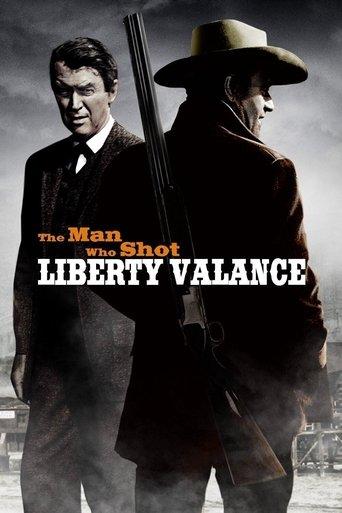
The Man Who Shot Liberty Valance
1962
The sourced concerns are substantially offset by delivered value.
What counts as a cash grab?
Commercial extraction prioritized over meaningful consumer or creative value. Profit, popularity, adaptations, sequels, remakes, high budgets, and normal marketing do not count by themselves.
Why?
The Man Who Shot Liberty Valance (1962) shows no credible contemporaneous or retrospective evidence that it was produced primarily as a cash grab. Trade and critical coverage emphasize John Ford's direction, the film's thematic complexity, and the notable pairing of James Stewart and John Wayne. Production reporting documents deliberate choices such as black and white photography and studio/exterior work, and reviewers and film historians treat the picture as artistically significant rather than a rushed or monetized exploitation of a brand.
- No sourced reporting or criticism identifies predatory monetization, rushed release, or deceptive pricing for this 1962 film.
- Major critics and film historians emphasize thematic depth and enduring artistic value.
- Production notes record intentional craft choices including black and white cinematography and studio/exterior shooting.
View full breakdownHide full breakdown
- The film is an adaptation of a Dorothy M. Johnson story and is discussed as a revisionist, standalone Western rather than franchise exploitation.
Score factors
| Direction | Factor | Evidence | Impact |
|---|---|---|---|
| Against | Adaptation with narrative originality | The film adapts a Dorothy M. Johnson short story and is widely discussed for its revisionist interrogation of Western myths, indicating substantive new narrative content rather than trivial reuse.[5][6] | -14 |
| Against | Deliberate production craft choices | Production accounts note the intentional use of black and white cinematography and a mix of Paramount soundstage and Thousand Oaks exteriors, reflecting deliberate aesthetic decisions rather than low-effort assembly.[7][2] | -12 |
| Against | Critical acclaim and thematic depth | Critics and scholars highlight the film's political themes, moral ambiguity, and status as one of John Ford's most thoughtful Westerns, indicating substantive artistic intent.[3][4] | -9 |
| For | No exploitative monetization found | Contemporary reviews and later production retrospectives do not report predatory monetization, deceptive pricing, or studio practices framed as cash grabbing for this release.[1][3][4] | +8 |
| For | No signal of low-effort reuse or brand exploitation | There is no sourced evidence that the film reused prior footage, functioned as a franchised spin-off, or exploited a preexisting commercial brand identity.[1][2] | +8 |
| For | Normal studio release and reception | Release records show a standard April 1962 Paramount distribution and routine critical debate, with no contemporaneous reports of rushed or deceptive release tactics aimed at short-term extraction.[1] | +4 |
Confidence: High · Multiple authoritative contemporary reviews and reputable retrospectives consistently emphasize artistic and production elements and do not document exploitative monetization, though I did not consult internal studio accounting or private memos that could reveal undisclosed profit-driven directives. · Researched 2026-08-08
Sources reviewed
- [1]www.tcm.com
- [2]en.wikipedia.org
- [3]www.rogerebert.com
- [4]www.rottentomatoes.com
- [5]www.tcm.com
- [6]www.filmsite.org
- [7]www.tcm.com
- [8]en.wikipedia.org
- [9]www.metacritic.com
- [10]www.rogerebert.com
View 35 more sourcesShow fewer sources
- [11]www.the-numbers.com
- [12]www.imdb.com
- [13]www.thecrimson.com
- [14]escholarship.org
- [15]es.wikipedia.org
- [16]etd.library.emory.edu
- [17]acikders.ankara.edu.tr
- [18]uplopen.com
- [19]en.wikipedia.org
- [20]fr.wikipedia.org
- [21]www.reddit.com
- [22]en.wikipedia.org
- [23]media.truewestmagazine.com
- [24]arxiv.org
- [25]lawreview.vermontlaw.edu
- [26]www.reddit.com
- [27]www.reddit.com
- [28]www.reddit.com
- [29]arxiv.org
- [30]arxiv.org
- [31]www.tcm.com
- [32]www.rottentomatoes.com
- [33]www.criterion.com
- [34]www.criterion.com
- [35]torontofilmsociety.com
- [36]www.criterion.com
- [37]www.imdb.com
- [38]catalog.saclibrary.org
- [39]en.wikipedia.org
- [40]www.pbs.org
- [41]www.criterion.com
- [42]en.wikipedia.org
- [43]deepblue.lib.umich.edu
- [44]en.wikipedia.org
- [45]www.ifi.ie
What does the community think?
The AI sees low cash-grab risk. What's your read?
Loading community verdict…