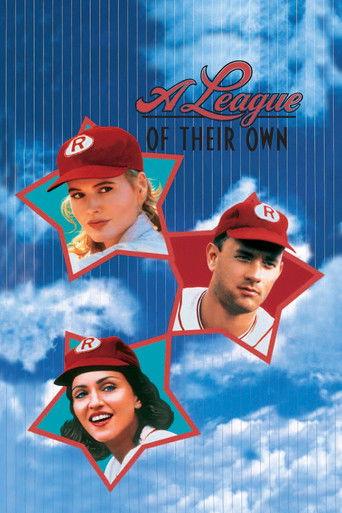
A League of Their Own
1992
The sourced concerns are substantially offset by delivered value.
What counts as a cash grab?
Commercial extraction prioritized over meaningful consumer or creative value. Profit, popularity, adaptations, sequels, remakes, high budgets, and normal marketing do not count by themselves.
Why?
A League of Their Own is a 1992 feature film directed by Penny Marshall, scripted from a story inspired by a PBS documentary about the All-American Girls Professional Baseball League and released July 1, 1992. It was a mainstream Columbia Pictures release with a reported $40 million production budget and about $132 million worldwide box office, and it received broadly positive reviews. I found no contemporaneous trade or press evidence that the film was produced or released with predatory monetization, rushed release tactics, or low-effort reuse aimed at extracting consumers.
- The film was developed from a PBS documentary and an original screenplay, not as a quick reuse of an existing studio franchise.
- Major-studio backing, a $40 million budget, and a high-profile director and cast indicate substantial production investment.
- Box office success and positive critical reception indicate consumer and critical value rather than purely extractive intent.
View full breakdownHide full breakdown
- Searches of contemporaneous reporting and trade sources turned up ordinary merchandising and marketing, not predatory or deceptive monetization practices.
Score factors
| Direction | Factor | Evidence | Impact |
|---|---|---|---|
| Against | Production scale and craft | The film was a major-studio Columbia Pictures release directed by Penny Marshall with a reported $40 million budget and a notable ensemble cast, indicating substantial production investment.[1][2] | -18 |
| Against | Original source and screenplay | The film was developed from a PBS documentary and produced from an original screenplay credited to Lowell Ganz and Babaloo Mandel from a story by Kelly Candaele and Kim Wilson, showing substantive new creative work rather than cheap reuse.[1][3] | -16 |
| Against | Commercial reception and reviews | The film opened July 1, 1992, earned roughly $107.5 million domestic and $132.4 million worldwide against a $40 million budget and received positive reviews, indicating consumer value and satisfaction.[1][4] | -11 |
| Against | Subject choice and creative risk | The film tackled a relatively uncommon mainstream subject in 1992, telling a women-centered sports story under a female director, which represents artistic and commercial risk rather than safe franchise recycling.[2][3] | -6 |
| For | No evidence of predatory monetization | Contemporaneous trade and press coverage and production notes do not show predatory pricing, deceptive release behavior, or otherwise exploitative monetization tied to the film at release.[1] | +4 |
| For | Merchandising context | References to merchandising appear in trade material and there is modern fan merchandise, but available sources present normal tie-ins rather than evidence of predatory or deceptive extraction practices.[6][5] | +3 |
Confidence: High · The conclusion is based on multiple contemporaneous trade and critical sources, box office and production data, and production history; gaps remain only for internal studio deliberations or undisclosed contracts which are not evident in public reporting. · Researched 2026-08-01
Sources reviewed
- [1]en.wikipedia.org
- [2]www.latimes.com
- [3]www.rogerebert.com
- [4]www.rogerebert.com
- [5]aleagueoftheirown.shop
- [6]www.worldradiohistory.com
- [7]www.boxofficemojo.com
- [8]www.the-numbers.com
- [9]www.imdb.com
- [10]www.imdb.com
View 13 more sourcesShow fewer sources
What does the community think?
The AI sees low cash-grab risk. What's your read?
Loading community verdict…