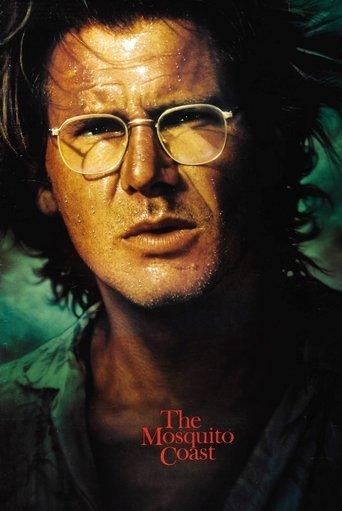
The Mosquito Coast
1986
The sourced concerns are substantially offset by delivered value.
What counts as a cash grab?
Commercial extraction prioritized over meaningful consumer or creative value. Profit, popularity, adaptations, sequels, remakes, high budgets, and normal marketing do not count by themselves.
Why?
The Mosquito Coast (1986) was a Peter Weir directed, Harrison Ford led adaptation of Paul Theroux’s novel that had a $25 million production budget and underperformed commercially, earning roughly $14 million domestically. Contemporary coverage and reviews emphasize substantial on-location production work, technical craft, and director-driven choices rather than predatory monetization or low-effort reuse. I find no credible evidence of deliberate exploitation, predatory pricing, or rushed deceptive release practices surrounding this theatrical release.
- Contemporary reporting documents a $25 million budget and a domestic box office around $14 million, indicating commercial underperformance rather than profit-first exploitation.
- Production reporting highlights extensive on-location shooting in Belize and notable creative investment by director Peter Weir.
- Major reviews praise production values and technical craft, pointing to substantive artistic effort.
View full breakdownHide full breakdown
- No credible sources describe predatory monetization, deceptive release, or cheap reuse of existing footage.
Score factors
| Direction | Factor | Evidence | Impact |
|---|---|---|---|
| Against | On-location production investment | Reporting and production notes document extensive location shooting in Belize and months of work on set with director Peter Weir and principal cast.[3][2] | -18 |
| Against | Critical recognition of craft | Contemporary critics such as Roger Ebert and the Los Angeles Times praised the film's production values, photography, and directorial choices.[4][1] | -16 |
| For | Absence of predatory monetization evidence | Searches of contemporary reporting and reviews yield no evidence of predatory pricing, exploitative merchandising schemes, or deceptive release practices tied to this theatrical release.[1] | +13 |
| Against | Auteur and cast engagement | Peter Weir, Harrison Ford, and other principal artists are documented as actively engaged in creative decisions, indicating meaningful creative investment rather than brand-only exploitation.[2] | -7 |
Confidence: High · Contemporary production reporting and multiple major reviews provide direct, consistent evidence about budget, on-location production, and creative investment, and no sources report exploitative monetization or deceptive release practices. · Researched 2026-10-04
Sources reviewed
- [1]www.latimes.com
- [2]www.peterweircave.com
- [3]catalog.afi.com
- [4]www.rogerebert.com
- [5]en.wikipedia.org
- [6]www.helen-mirren.net
- [7]sede.mcu.gob.es
- [8]catalog.afi.com
- [9]www.latimes.com
- [10]www.latimes.com
View 9 more sourcesShow fewer sources
- [11]www.latimes.com
- [12]www.latimes.com
- [13]www.imdb.com
- [14]en.wikipedia.org
- [15]en.wikipedia.org
- [16]en.wikipedia.org
- [17]www.reddit.com
- [18]es.wikipedia.org
- [19]fr.wikipedia.org
What does the community think?
The AI sees low cash-grab risk. What's your read?
Loading community verdict…