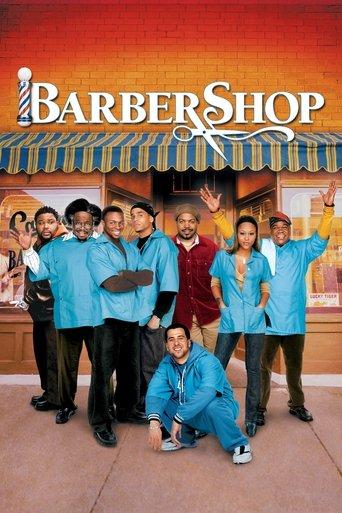
Barbershop
2002
The sourced concerns are substantially offset by delivered value.
What counts as a cash grab?
Commercial extraction prioritized over meaningful consumer or creative value. Profit, popularity, adaptations, sequels, remakes, high budgets, and normal marketing do not count by themselves.
Why?
Barbershop (2002) is an original ensemble comedy drama written from a Mark Brown story, directed by Tim Story in his feature debut, produced by Cube Vision and MGM, and shot in Chicago with detailed production design and barber consultation; it opened strong at the box office and spawned sequels and a TV series, but I found no credible evidence of predatory monetization, deceptive release practices, or materially low-effort reuse at release.
- Original screenplay and documented production work in Chicago with barber consultants.
- Contemporary reviews and production notes emphasize craft and character, not cheap reuse.
- Box office success and sequels followed, but no primary-source evidence of exploitative monetization at release.
View full breakdownHide full breakdown
- No credible reporting found of rushed or deceptive release tactics or price/value mismatch.
Score factors
| Direction | Factor | Evidence | Impact |
|---|---|---|---|
| For | No sourced evidence of exploitative monetization | Searches of contemporary reporting, production notes, and box office coverage uncovered no credible reporting of predatory pricing, deceptive release, or rushed product tactics for the 2002 release.[2][1] | +20 |
| Against | Original screenplay | The film is credited to an original story by Mark Brown with screenplay credits to Brown and Don D, described in production notes as an original script later set and shot in Chicago.[1] | -18 |
| Against | Production craft and location work | Contemporary production notes and reviews detail location scouting in Chicago, set and production design work, barber consultation, and Tim Story's direction as his first larger-budget feature.[1][3] | -17 |
| Against | Box office success and sequels | The film opened strongly and was a box office success, and it later spawned sequels and a TV series, but these facts alone do not constitute evidence of predatory monetization.[2] | -12 |
| Against | Contemporary reviews | Multiple contemporary reviews and local coverage praised the ensemble, character work, and heart of the film rather than criticizing it as a low-effort brand exploitation.[3][4] | -11 |
Confidence: High · Contemporary production notes, major press reviews, and box office records were available and consistent, and there is no primary-source reporting indicating exploitative monetization or rushed/deceptive release practices. · Researched 2026-11-06
Sources reviewed
- [1]cinema.com
- [2]www.boxofficemojo.com
- [3]www.latimes.com
- [4]www.cbsnews.com
- [5]icecube.com
- [6]en.wikipedia.org
- [7]catalog.afi.com
- [8]www.the-numbers.com
- [9]www.imdb.com
- [10]en.wikipedia.org
View 12 more sourcesShow fewer sources
What does the community think?
The AI sees low cash-grab risk. What's your read?
Loading community verdict…