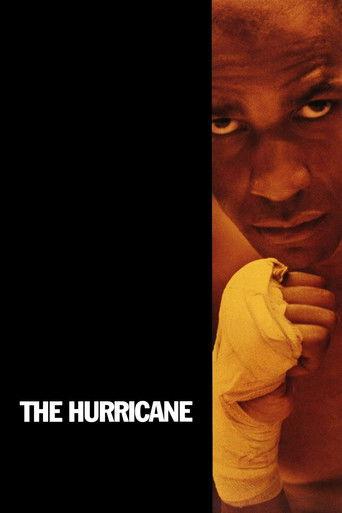
The Hurricane
1999
The sourced concerns are substantially offset by delivered value.
What counts as a cash grab?
Commercial extraction prioritized over meaningful consumer or creative value. Profit, popularity, adaptations, sequels, remakes, high budgets, and normal marketing do not count by themselves.
Why?
The Hurricane (1999), directed by Norman Jewison and starring Denzel Washington, received strong notices for performance and production while also generating documented controversy over factual dramatizations of Rubin Carter's story. Contemporary reporting and critics recorded specific disputes about historical accuracy and prompted public rebuttals from the filmmakers. I found no credible reporting that the film employed predatory monetization, deceptive pricing, or obvious low-effort reuse aimed at extracting consumers beyond ordinary theatrical release practices.
- Contemporary critics and reporters documented substantive factual disputes about the film's depiction of real events.
- Filmmakers and producers publicly rebutted accuracy criticisms, showing active controversy rather than quiet exploitation.
- Major reviews praised Denzel Washington's performance and the film's production values, indicating substantial craft investment.
View full breakdownHide full breakdown
- No credible sources report predatory monetization, deceptive pricing, or cheap reuse consistent with a cash-grab.
Score factors
| Direction | Factor | Evidence | Impact |
|---|---|---|---|
| Against | Critical praise and production investment | Major contemporary reviews praised Denzel Washington's performance and the film's production, indicating substantial artistic and technical investment.[1][2] | -18 |
| For | Historical accuracy concerns | Contemporary reporting and critics, including a New York Times reporter cited by reviewers, accused the film of dramatizing or distorting aspects of Rubin Carter's case.[1][3] | +13 |
| Against | Substantive dramatization and wide release | The film is a full-length, widely released biographical drama based on Carter's autobiography and other accounts, bringing his story to broad audiences rather than a minimal or derivative product.[4] | -10 |
| For | Filmmaker public rebuttal | Producers and the film's creative team publicly disputed accuracy critiques, placing ads and issuing responses to critical reporting.[5][6] | +9 |
Confidence: High · Contemporary mainstream reporting and major critic reviews provide specific evidence about accuracy disputes and production quality, and there is an absence of reporting on predatory monetization, though internal studio marketing financials were not consulted. · Researched 2026-08-14
Sources reviewed
- [1]www.rogerebert.com
- [2]www.washingtonpost.com
- [3]www.latimes.com
- [4]catalog.afi.com
- [5]www.latimes.com
- [6]www.latimes.com
- [7]www.boxofficemojo.com
- [8]en.wikipedia.org
- [9]www.latimes.com
- [10]www.the-numbers.com
View 25 more sourcesShow fewer sources
- [11]groups.google.com
- [12]cdm17103.contentdm.oclc.org
- [13]www.latimes.com
- [14]eppc.org
- [15]m.imdb.com
- [16]sportsliteracy.org
- [17]americanaction.us
- [18]www.nerleelef.com
- [19]en.wikipedia.org
- [20]en.wikipedia.org
- [21]www.reddit.com
- [22]www.reddit.com
- [23]www.marxists.org
- [24]www.pbs.org
- [25]en-academic.com
- [26]digitalcommons.nyls.edu
- [27]cdn.loc.gov
- [28]www.latimes.com
- [29]digitalcommons.nyls.edu
- [30]www.washingtonpost.com
- [31]www.kuer.org
- [32]en.wikipedia.org
- [33]en.wikipedia.org
- [34]en.wikipedia.org
- [35]en.wikipedia.org
What does the community think?
The AI sees low cash-grab risk. What's your read?
Loading community verdict…