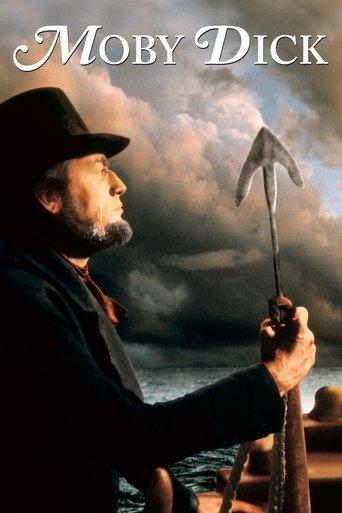
Moby Dick
1956
The sourced concerns are substantially offset by delivered value.
What counts as a cash grab?
Commercial extraction prioritized over meaningful consumer or creative value. Profit, popularity, adaptations, sequels, remakes, high budgets, and normal marketing do not count by themselves.
Why?
John Huston’s 1956 Moby Dick was a major studio adaptation of Herman Melville directed and co-adapted by Huston with Ray Bradbury, filmed on location in Ireland and at sea, and built around substantial practical effects including a large whale apparatus. Contemporary and modern sources report significant production expense and critical recognition, while noting the picture did not recoup its budget on initial release. I found no credible reporting that the release used predatory monetization, deceptive timing, or obvious low-effort reuse to extract consumers.
- No credible sources document predatory monetization or deceptive release practices for the 1956 film.
- Production reporting describes substantial, bespoke production work including location shoots and a large whale prop.
- Adaptation credited to John Huston and Ray Bradbury and the film received critical recognition and awards.
View full breakdownHide full breakdown
- Contemporary sources record the film as a commercial disappointment, not a profitable exploitation scheme.
Score factors
| Direction | Factor | Evidence | Impact |
|---|---|---|---|
| For | No sign of low-effort reuse | Production notes and reviews document bespoke sets, original sea footage and practical effects, and on-set incidents, which contradict claims of demonstrably low-effort reuse of prior material.[1][2] | +19 |
| Against | Notable production investment | Contemporary accounts and studio histories describe location filming in Youghal and sea work and report a large practical whale apparatus and other costly studio effects, indicating substantial production effort.[1] | -18 |
| Against | Adaptation and creative authorship | The film is credited to John Huston with a screenplay credit shared by Ray Bradbury and was publicly discussed as a serious, faithful adaptation rather than a quick licensed reproduction.[3] | -16 |
| For | No evidence of predatory monetization | I found no contemporary reporting or later research documenting predatory monetization, aggressive deceptive merchandising, or pay-to-view exploitation tied to the 1956 theatrical release.[2] | +13 |
| Against | Commercial outcome inconsistent with extraction motive | Sources report the film cost roughly $4.5 million and did not recoup its budget on initial release, described as a commercial disappointment rather than a lucrative rapid-extraction release.[4] | -9 |
Confidence: High · Reputable contemporary and archival film-reference sources (TCM, AFI, Filmsite, encyclopedic film entries) provide detailed production and release reporting and no evidence of predatory monetization, though primary studio marketing memos were not consulted. · Researched 2026-08-08
Sources reviewed
- [1]www.tcm.com
- [2]www.filmsite.org
- [3]catalog.afi.com
- [4]en.wikipedia.org
- [5]en.wikipedia.org
- [6]www.imdb.com
- [7]www.imdb.com
- [8]www.imdb.com
- [9]www.imdb.com
- [10]en.wikipedia.org
View 24 more sourcesShow fewer sources
- [11]www.irishtimes.com
- [12]cinemagraphe.com
- [13]catalog.afi.com
- [14]en.wikipedia.org
- [15]www.newyorker.com
- [16]de.wikipedia.org
- [17]eoi1zaragoza.org
- [18]en.wikipedia.org
- [19]www.amerlit.com
- [20]www.reddit.com
- [21]escholarship.org
- [22]vi.web-platforms-vi.nyti.nyt.net
- [23]muckrack.com
- [24]www.rottentomatoes.com
- [25]m.filmaffinity.com
- [26]www.imdb.com
- [27]www.rottentomatoes.com
- [28]en-academic.com
- [29]s3-euw1-ap-pe-df-pch-content-store-p.s3.eu-west-1.amazonaws.com
- [30]www.imdb.com
- [31]www.cine.com
- [32]it.wikipedia.org
- [33]virtualmmx.ddns.net
- [34]now.acs.org
What does the community think?
The AI sees low cash-grab risk. What's your read?
Loading community verdict…