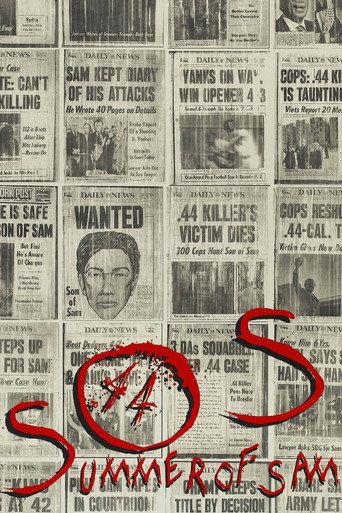
Summer of Sam
1999
The sourced concerns are substantially offset by delivered value.
What counts as a cash grab?
Commercial extraction prioritized over meaningful consumer or creative value. Profit, popularity, adaptations, sequels, remakes, high budgets, and normal marketing do not count by themselves.
Why?
Summer of Sam (1999) was a Spike Lee directed, $22 million feature about the Son of Sam murders that received substantial mainstream coverage and mixed to positive reviews. Contemporary reporting documents conventional theatrical and home-video distribution, studio-mandated edits for rating concerns, and debate over the film's portrayal of Italian-Americans. I found no credible reporting of predatory monetization, large-scale tie-in merchandising, rushed deceptive release practices, or clear low-effort reuse that would meet the cash-grab definition, though some commentators accused the film of sensationalizing the subject.
- Feature-level production under Spike Lee with documented $22 million budget and standard distribution.
- Contemporary critical coverage was substantial and often favorable, indicating creative investment.
- Studio required content edits for rating, showing editorial oversight rather than deceptive rush to market.
View full breakdownHide full breakdown
- Some commentators and a congressional mention criticized sensational or derogatory portrayals, raising exploitation concerns but not proving a cash grab.
Score factors
| Direction | Factor | Evidence | Impact |
|---|---|---|---|
| Against | Production scale and credits | The film is documented as a Spike Lee feature with a reported $22 million production budget and credited production/design personnel, indicating standard feature-level investment.[2][3][1] | -18 |
| Against | Contemporary critical response | Major critics and review aggregators recorded mixed to positive reviews, with sustained critical attention rather than purely commercial messaging.[4][1] | -16 |
| For | Criticism for sensational or derogatory depiction | Some commentators and entries in the congressional record criticized the film's portrayal of Italian-Americans and described it as derogatory or sensational, which signals exploitation concerns though not direct monetization evidence.[5][6] | +9 |
| Against | No evidence of predatory monetization | Contemporary distribution records and reporting describe a normal theatrical run and later home-video release, with no reporting of predatory tie-ins or exploitative monetization schemes.[7][2] | -8 |
| Against | Studio-mandated edits for rating | Press reporting shows Disney/Touchstone required edits to secure an R rating and Spike Lee re-edited material in post-production.[8] | -6 |
Confidence: High · Evidence comes from contemporary mainstream press, industry financial summaries and aggregator reviews which together give strong specific documentation of production, distribution and reception, the main gaps being absence of internal studio memos or merchandising contracts which would be needed to · Researched 2026-08-03
Sources reviewed
- [1]en.wikipedia.org
- [2]www.the-numbers.com
- [3]catalog.afi.com
- [4]www.rottentomatoes.com
- [5]www.congress.gov
- [6]www.wsws.org
- [7]www.boxofficemojo.com
- [8]www.latimes.com
- [9]www.imdb.com
- [10]www.imdb.com
View 11 more sourcesShow fewer sources
- [11]m.imdb.com
- [12]www.metacritic.com
- [13]www.latimes.com
- [14]www.metacritic.com
- [15]www.theguardian.com
- [16]it.wikipedia.org
- [17]www.reddit.com
- [18]en.wikipedia.org
- [19]arxiv.org
- [20]en.wikipedia.org
- [21]en.wikipedia.org
What does the community think?
The AI sees low cash-grab risk. What's your read?
Loading community verdict…