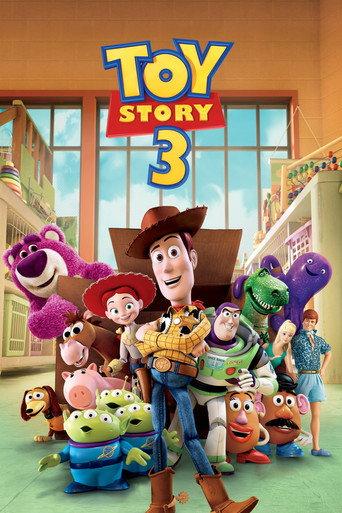
Toy Story 3
2010
The sourced concerns are substantially offset by delivered value.
What counts as a cash grab?
Commercial extraction prioritized over meaningful consumer or creative value. Profit, popularity, adaptations, sequels, remakes, high budgets, and normal marketing do not count by themselves.
Why?
Toy Story 3 (2010) shows clear commercial amplification around its release, License! Global reporting attributed about $2.4 billion in 2010 retail sales to the Toy Story franchise tied to the film, and multiple retail tie-ins, a licensed video game and extensive product launches accompanied the theatrical run. At the same time the film itself received near-universal critical praise, high aggregator scores, major awards including two Oscars, and documented production work at Pixar, and I found no credible reporting that the theatrical release or core production was rushed or deceptively monetized.
- License! Global reporting attributed $2.4 billion in 2010 retail sales to Toy Story 3 merchandising, indicating heavy commercial extraction through licensing.
- Multiple retail promotions and product launches were coordinated with the film, including Toys R Us promotions, Toy Fair product rollouts and branded sticker and toy releases.
- Ancillary products show mixed quality, the official video game released June 15, 2010 received praise for some modes but reviewers called parts obligatory or like advertising, indicating some lower-effort tie-ins.
View full breakdownHide full breakdown
- The film proper shows substantial mitigating evidence, it cost about $200M, earned over $1 billion, scored highly with critics and won Academy Awards, which argues against the movie itself being a low-effort cash grab.
Score factors
| Direction | Factor | Evidence | Impact |
|---|---|---|---|
| For | Merchandising revenue spike | License! Global reporting and industry coverage credited Toy Story 3 with driving roughly $2.4 billion in retail licensed merchandise sales for Disney in 2010.[1] | +23 |
| Against | Documented production craft at Pixar | Pixar published production notes showing substantive work on new environments and animation, and reporting describes study of real dumps for the climactic sequence and extensive rebuilding of assets.[2][3] | -18 |
| Against | Critical acclaim and awards | The film holds very high aggregator scores, grossed over $1 billion worldwide and won Academy Awards including Best Animated Feature and Best Original Song, evidence of substantial consumer and creative value.[4][5] | -17 |
| For | Licensed video game and mobile tie-ins | The official Toy Story 3 video game and mobile apps launched before the film and received mixed reviews, with critics calling parts 'obligatory and rushed' and the iOS app 'painfully un-fun', indicating some lower-effort ancillary products.[6][7] | +15 |
| For | Extensive retail tie-ins and promotions | Major retail and licensing promotions coincided with the film, including Toys "R" Us store promotions, product announcements at the American International Toy Fair and Panini sticker collections.[8][9][11][10] | +9 |
Confidence: High · I relied on industry reporting, publisher and studio materials, contemporaneous reviews, and award and box-office records; primary gaps are granular internal marketing plans and proprietary licensing contracts which are not public. · Researched 2026-07-27
Sources reviewed
- [1]www.thewrap.com
- [2]www.pixar.com
- [3]en.wikipedia.org
- [4]www.metacritic.com
- [5]www.boxofficemojo.com
- [6]www.gamespot.com
- [7]www.macworld.com
- [8]www.mediapost.com
- [9]pixarplanet.com
- [10]m.service.mattel.com
View 168 more sourcesShow fewer sources
- [11]www.prnewswire.com
- [12]www.boxofficemojo.com
- [13]d23.com
- [14]thewaltdisneycompany.com
- [15]disneyvacationclub.disney.go.com
- [16]www.wbur.org
- [17]www.pixar.com
- [18]core.ac.uk
- [19]www.disboards.com
- [20]en.wikipedia.org
- [21]en.wikipedia.org
- [22]tile.loc.gov
- [23]en.wikipedia.org
- [24]de.wikipedia.org
- [25]en.wikipedia.org
- [26]www.randomhouse.com
- [27]research.pixar.com
- [28]static1.squarespace.com
- [29]www.reddit.com
- [30]www.reddit.com
- [31]studylib.net
- [32]www.yahoo.com
- [33]www.metacritic.com
- [34]www.reddit.com
- [35]www.reddit.com
- [36]www.reddit.com
- [37]www.reddit.com
- [38]thecynicsnotebook.blogspot.com
- [39]www.reddit.com
- [40]earthii.fandom.com
- [41]www.reddit.com
- [42]www.reddit.com
- [43]www.tumgik.com
- [44]www.reddit.com
- [45]www.reddit.com
- [46]www.reddit.com
- [47]unshavedmouse.com
- [48]www.reddit.com
- [49]www.reddit.com
- [50]www.scribd.com
- [51]huggingface.co
- [52]forum.blu-ray.com
- [53]www.imdb.com
- [54]top10movieswithveikkohoffman.blogspot.com
- [55]forums.spacebattles.com
- [56]handwiki.org
- [57]adrianwerner.wordpress.com
- [58]everything.explained.today
- [59]disneyloyalty.fandom.com
- [60]fr.wikipedia.org
- [61]handwiki.org
- [62]www.forum-3dcenter.org
- [63]everything.explained.today
- [64]ultimatepopculture.fandom.com
- [65]handwiki.org
- [66]everythingaboutthegameatgamespot.blogspot.com
- [67]huggingface.co
- [68]www.imdb.com
- [69]pixarplanet.com
- [70]www.rogerebert.com
- [71]www.latimes.com
- [72]www.christianitytoday.com
- [73]xtraordinarymom.blogspot.com
- [74]letterboxd.com
- [75]themoviebros.wordpress.com
- [76]www.newyorker.com
- [77]wwwspcsavage.blogspot.com
- [78]sojo.net
- [79]nantucketfilmfestival.org
- [80]d23.com
- [81]www4.wng.org
- [82]www.reddit.com
- [83]news-archive.plymouthlibrary.org
- [84]www.staradvertiser.com
- [85]en.wikipedia.org
- [86]www.youthvillages.org
- [87]www.reddit.com
- [88]www.reddit.com
- [89]www.reddit.com
- [90]www.reddit.com
- [91]www.reddit.com
- [92]www.metacritic.com
- [93]www.rottentomatoes.com
- [94]www.metacritic.com
- [95]www.metacritic.com
- [96]editorial.rottentomatoes.com
- [97]www.metacritic.com
- [98]www.rottentomatoes.com
- [99]editorial.rottentomatoes.com
- [100]editorial.rottentomatoes.com
- [101]www.rottentomatoes.com
- [102]ueaeprints.uea.ac.uk
- [103]ariel.pucsp.br
- [104]www.reddit.com
- [105]ueaeprints.uea.ac.uk
- [106]riull.ull.es
- [107]www.tesisenred.net
- [108]www.reddit.com
- [109]www.reddit.com
- [110]www.reddit.com
- [111]www.reddit.com
- [112]www.oscars.org
- [113]www.imdb.com
- [114]www.oscars.org
- [115]www.oscars.org
- [116]d23.com
- [117]www.theguardian.com
- [118]www.cbsnews.com
- [119]www.cbsnews.com
- [120]www.imdb.com
- [121]abcnews.com
- [122]digitalcollections.oscars.org
- [123]www.imdb.com
- [124]digitalcollections.oscars.org
- [125]en.wikipedia.org
- [126]awardsdatabase.oscars.org
- [127]www.reddit.com
- [128]en.wikipedia.org
- [129]en.wikipedia.org
- [130]g-ecx.images-amazon.com
- [131]www.reddit.com
- [132]www.reddit.com
- [133]a.dolimg.com
- [134]www.reddit.com
- [135]www.reddit.com
- [136]letterboxd.com
- [137]www.scribd.com
- [138]www.scribd.com
- [139]store.steampowered.com
- [140]thisismyjoystick.com
- [141]thisismyjoystick.com
- [142]thisismyjoystick.com
- [143]www.pushsquare.com
- [144]www.pushsquare.com
- [145]duncangough.com
- [146]thecoolestvideogames.fandom.com
- [147]handwiki.org
- [148]www.metacritic.com
- [149]the-jh-movie-collection-official.fandom.com
- [150]store.steampowered.com
- [151]gamingbolt.com
- [152]store.steampowered.com
- [153]www.independent.co.uk
- [154]store.steampowered.com
- [155]store.steampowered.com
- [156]www.boxofficemojo.com
- [157]www.the-numbers.com
- [158]www.boxofficemojo.com
- [159]worldwideboxoffice.com
- [160]www.imdb.com
- [161]everything.explained.today
- [162]www.boxofficemojo.com
- [163]www.cbsnews.com
- [164]www.boxofficemojo.com
- [165]en.wikipedia.org
- [166]en.wikipedia.org
- [167]theses.cz
- [168]www.thehenryford.org
- [169]auetd.auburn.edu
- [170]en.wikipedia.org
- [171]en.wikipedia.org
- [172]ttabvue.uspto.gov
- [173]arxiv.org
- [174]www.reddit.com
- [175]www.reddit.com
- [176]www.reddit.com
- [177]www.reddit.com
- [178]www.reddit.com
What does the community think?
The AI sees low cash-grab risk. What's your read?
Loading community verdict…