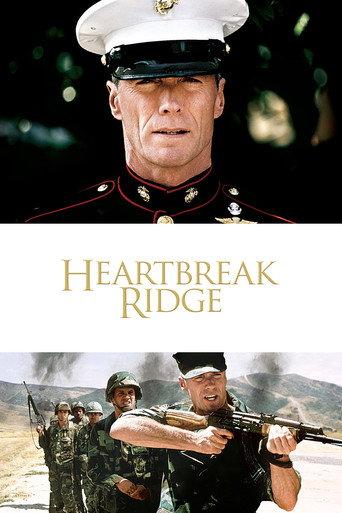
Heartbreak Ridge
1986
The sourced concerns are substantially offset by delivered value.
What counts as a cash grab?
Commercial extraction prioritized over meaningful consumer or creative value. Profit, popularity, adaptations, sequels, remakes, high budgets, and normal marketing do not count by themselves.
Why?
Heartbreak Ridge (1986) was written, produced, directed by, and starred Clint Eastwood, shot with Department of Defense cooperation before the Pentagon later withdrew support, and opened wide in December 1986 to solid box office returns; contemporary reviews discussed its familiar Eastwood themes and craftsmanship rather than predatory monetization or deceptive release tactics. I found production and box office data and contemporary reviews but no credible evidence of predatory monetization, deceptive pricing, or obvious low-effort reuse aimed primarily at extracting consumer dollars.
- Clint Eastwood was producer, director, and star indicating personal creative investment and substantial production involvement.
- Contemporary reviews treat the film as a conventional Eastwood vehicle with craft and performance, not a thinly disguised monetization scheme.
- Box office and budget figures show a standard commercial release, with no disclosed premium pricing or exploitative monetization practices.
View full breakdownHide full breakdown
- Department of Defense cooperation then withdrawal indicates normal production negotiation issues, not evidence of rushed deceptive release or price gouging.
Score factors
| Direction | Factor | Evidence | Impact |
|---|---|---|---|
| For | No disclosed exploitative monetization | I found no contemporaneous reporting of predatory monetization schemes, deceptive pricing, heavy reuse of assets, or add-on monetization tied to the film release.[2][1] | +20 |
| Against | Creator involvement | Clint Eastwood produced, directed, and starred in Heartbreak Ridge, showing substantial personal creative and production investment.[3] | -18 |
| Against | Budget and commercial release | Reported production budget and box office receipts indicate a standard midrange commercial film rather than a low-cost churned product or unusual price/value mismatch.[3][1] | -9 |
| Against | Critical reception | Major contemporary reviews described the film as a routine but energetically made Eastwood vehicle emphasizing performance and familiar themes rather than calling it low-effort or exploitative.[2][4] | -7 |
Confidence: High · Multiple primary contemporary sources cover production, reviews, and box office; there is no sourced evidence of predatory monetization or low-effort reuse, though military cooperation issues are documented. · Researched 2026-10-26
Sources reviewed
- [1]www.the-numbers.com
- [2]www.rogerebert.com
- [3]en.wikipedia.org
- [4]www.latimes.com
- [5]catalog.afi.com
- [6]time.com
- [7]catalog.afi.com
- [8]www.washingtonpost.com
- [9]filmdb.co.uk
- [10]www.boxofficemojo.com
View 14 more sourcesShow fewer sources
- [11]www.latimes.com
- [12]www.latimes.com
- [13]www.washingtonpost.com
- [14]en.wikipedia.org
- [15]en.wikipedia.org
- [16]dailyiowan.lib.uiowa.edu
- [17]gateway-ipfs.st
- [18]digitize.gp.lib.mi.us
- [19]era.ed.ac.uk
- [20]cultureinjection.wordpress.com
- [21]www.reaganlibrary.gov
- [22]de.wikipedia.org
- [23]zh.wikipedia.org
- [24]es.wikipedia.org
What does the community think?
The AI sees low cash-grab risk. What's your read?
Loading community verdict…