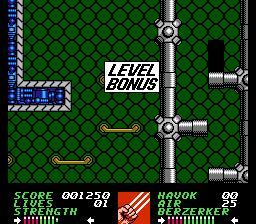
Wolverine
1991
There are sourced concerns, but the case is limited.
What counts as a cash grab?
Commercial extraction prioritized over meaningful consumer or creative value. Profit, popularity, adaptations, sequels, remakes, high budgets, and normal marketing do not count by themselves.
Why?
Wolverine (NES, 1991) was developed by Software Creations and published by LJN as a licensed Marvel tie in, released in North America in October 1991. Contemporary and retrospective coverage frames the game as a short, difficult licensed action platformer with limited bosses and minimal story, while some sources praise its graphics and sound. Reporting shows LJN's pattern of aggressively licensing properties, but I found no primary documentation of predatory pricing, forced add-ons, or deceptive release practices specific to this cartridge.
- Publisher LJN has a documented reputation for aggressively licensing properties, cited by retrospective coverage.
- Multiple reviews note the game's short length, sparse bosses, and unforgiving mechanics consistent with low added consumer value.
- Some sources credit Software Creations for competent graphics and sound, which counts as mitigating production effort.
View full breakdownHide full breakdown
- No sources located that document predatory monetization, unusual pricing, or deceptive release practices for this title.
Score factors
| Direction | Factor | Evidence | Impact |
|---|---|---|---|
| For | Short sparse content and gameplay | Multiple reviews report the game is short, features roughly 10 levels but only two bosses and minimal story, indicating limited substantive content for a licensed title.[1][2] | +19 |
| For | Publisher licensing pattern | Retrospective coverage explicitly states LJN purchased many licenses to monetize comics properties quickly, linking the publisher to license-driven commercial strategy.[1][3] | +18 |
| Against | Evidence of production craft | Sources credit developer Software Creations with competent graphics and sound for the NES, suggesting nontrivial development effort and some mitigating craft.[4][5] | -10 |
Confidence: Medium · Evidence relies mainly on retrospective reviews and publisher reputation reporting, there is limited contemporaneous production or financial documentation available online to decisively confirm exploitative commercial intent. · Researched 2026-09-21
Sources reviewed
- [1]comicbookvideogames.com
- [2]indiegamerchick.com
- [3]en.wikipedia.org
- [4]www.mobygames.com
- [5]www.nesfiles.com
- [6]gamefaqs.gamespot.com
- [7]gamefaqs.gamespot.com
- [8]www.classic-games.net
- [9]en.wikipedia.org
- [10]gamefaqs.gamespot.com
View 22 more sourcesShow fewer sources
- [11]gamefaqs.gamespot.com
- [12]www.gamespot.com
- [13]gamefaqs.gamespot.com
- [14]gamefabrique.com
- [15]datassette.s3.us-west-004.backblazeb2.com
- [16]www.youtube.com
- [17]en.wikipedia.org
- [18]es.wikipedia.org
- [19]www.youtube.com
- [20]en.wikipedia.org
- [21]archives.federalregister.gov
- [22]www.reddit.com
- [23]es.wikipedia.org
- [24]manuals.plus
- [25]www.reddit.com
- [26]manuals.plus
- [27]www.reddit.com
- [28]www.reddit.com
- [29]www.reddit.com
- [30]www.lolsuite.org
- [31]manuals.plus
- [32]www.reddit.com
What does the community think?
The AI found some cash-grab signs. What's your read?
Loading community verdict…