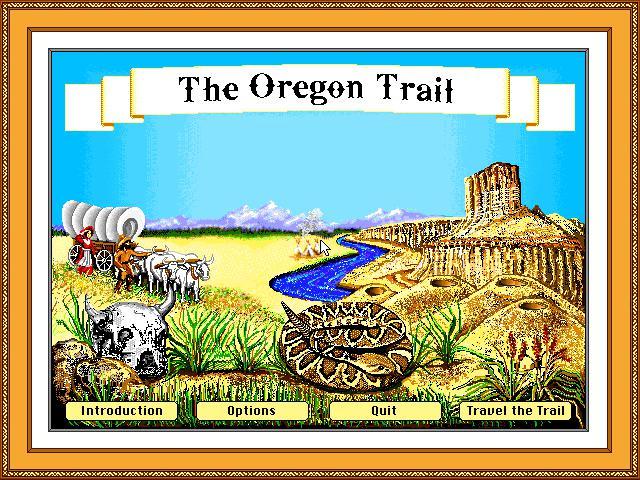
The Oregon Trail (1971)
1971
The sourced concerns are substantially offset by delivered value.
What counts as a cash grab?
Commercial extraction prioritized over meaningful consumer or creative value. Profit, popularity, adaptations, sequels, remakes, high budgets, and normal marketing do not count by themselves.
Why?
The Oregon Trail (1971) was built by teachers Don Rawitsch, Bill Heinemann, and Paul Dillenberger for an eighth grade history class in December 1971 and was donated to the state-sponsored Minnesota Educational Computing Consortium in 1974 for classroom distribution. MECC provided the title to Minnesota schools and later sold software diskettes outside the state as microcomputers spread, producing significant revenue for MECC while the original creators received no royalties. I found no credible reporting that the 1971 title involved predatory monetization, rushed or deceptive release practices, or low-effort exploitation.
- Created in 1971 by three teachers as an in-class educational simulation and given to MECC in 1974.
- MECC was a state-sponsored educational consortium that distributed the program to schools and later sold copies more broadly.
- Reporting indicates the original creators did not receive royalties while MECC later earned substantial revenue from the title.
View full breakdownHide full breakdown
- No sources document predatory monetization, deceptive release practices, or deliberate low-effort brand exploitation of the 1971 program.
Score factors
| Direction | Factor | Evidence | Impact |
|---|---|---|---|
| Against | Educational classroom origin | The game was developed by three student teachers for an eighth grade history class and first played December 3, 1971, demonstrating explicit educational intent.[2] | -18 |
| Against | Donated to MECC, creators not paid | The original authors gave the program to the Minnesota Educational Computing Consortium and reporting states the creators did not receive royalties for later commercial success.[1][3] | -12 |
| Against | Substantial later development and updates | Later versions reworked the title with graphics, sound, and expanded gameplay for home and school platforms, indicating substantive content updates rather than simple low-effort reuse.[5][4] | -12 |
| For | Significant MECC revenue | Contemporaneous reporting quotes MECC leadership that The Oregon Trail later represented a large fraction of MECC's revenues when sold broadly to schools and consumers.[1][6] | +10 |
| For | MECC distribution and disk sales | MECC distributed the program to Minnesota schools and, according to reporting, charged other customers roughly $10 to $20 for diskettes during early distribution.[7][8] | +8 |
Confidence: High · Multiple primary and reputable secondary sources including MECC archives, Minnesota historical documentation, and journalistic retrospectives corroborate origin, donation, distribution, and lack of evidence for predatory practices; gaps remain around internal MECC commercial decisions but do not ind · Researched 2026-08-06
Sources reviewed
- [1]www.the74million.org
- [2]mecc.co
- [3]www.vice.com
- [4]www.pbs.org
- [5]www.format.com
- [6]gameinformer.com
- [7]mecc.co
- [8]en.wikipedia.org
- [9]mecc.co
- [10]mncomputinghistory.com
View 29 more sourcesShow fewer sources
- [11]en.wikipedia.org
- [12]www.mnhs.org
- [13]artsandculture.google.com
- [14]oregontrail.fandom.com
- [15]archives.museumofplay.org
- [16]www.asau.ru
- [17]www.museumofplay.org
- [18]en.wikipedia.org
- [19]scholarsbank.uoregon.edu
- [20]www.ludoscience.com
- [21]www.reddit.com
- [22]www.reddit.com
- [23]files.eric.ed.gov
- [24]www.oregonlegislature.gov
- [25]www.fastcompany.com
- [26]time.com
- [27]aadl.org
- [28]www.trs-80.com
- [29]www.congress.gov
- [30]elisoftware.org
- [31]www.digitalgreensboro.org
- [32]www.adventureclassicgaming.com
- [33]www.scribd.com
- [34]www.auditor.nc.gov
- [35]www.govinfo.gov
- [36]4apedia.com
- [37]www.courthousenews.com
- [38]americanhistory.si.edu
- [39]historydollop.com
What does the community think?
The AI sees low cash-grab risk. What's your read?
Loading community verdict…