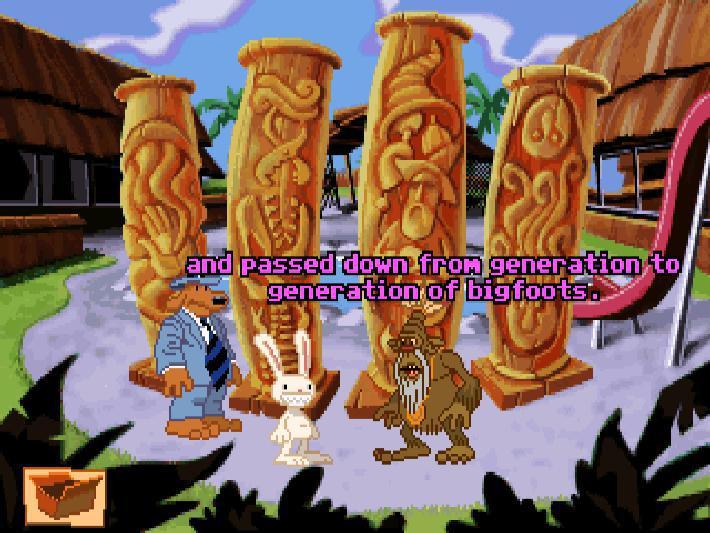
Sam & Max Hit the Road
1993
The sourced concerns are substantially offset by delivered value.
What counts as a cash grab?
Commercial extraction prioritized over meaningful consumer or creative value. Profit, popularity, adaptations, sequels, remakes, high budgets, and normal marketing do not count by themselves.
Why?
Sam & Max Hit the Road is a 1993 LucasArts point and click adventure based on Steve Purcell's comics, built as an original full game with CD-ROM speech and music on the higher-end release. Contemporary and retrospective sources document deliberate design choices, an innovative cursor interface, and broad critical praise rather than predatory monetization tactics. Reissues on GOG in 2014 and a later Steam re-release were sold as complete purchases. I found no credible reporting that the title was produced or marketed as a predatory cash grab.
- No credible evidence of predatory monetization, microtransactions, or subscription-based exploitation for the original game or its re-releases.
- The title is original content based on Steve Purcell's work, with documented design and production investment rather than low-effort reuse.
- Multiple contemporary and retrospective sources praise its writing, interface innovation, voice/music on CD-ROM, and art direction.
View full breakdownHide full breakdown
- Re-releases were distributed as full single-purchase products on GOG and Steam, consistent with standard commercial practice.
Score factors
| Direction | Factor | Evidence | Impact |
|---|---|---|---|
| For | No exploitative monetization found | Searches and store/support pages show the game and its reissues were sold as single-purchase products with no microtransactions or subscription model reported.[5][1] | +20 |
| Against | Documented production craft and innovations | Contemporary reporting and retrospectives note an innovative cursor-based interface, CD-ROM speech and music on the higher-tier release, and credited art direction, showing nontrivial production effort.[2][3][1] | -18 |
| Against | Original content from Steve Purcell | Documentation and interviews attribute the game's concept and writing to Steve Purcell and LucasArts staff, indicating original creative investment rather than trivial reuse of existing game assets.[2][6][4] | -16 |
| Against | Strong critical reputation | Multiple reviews and retrospective lists praise the game as a standout LucasArts adventure, indicating consumer and critical value that runs counter to a cash-grab characterization.[3][7][4] | -14 |
| Against | Re-releases were standard full-sales | The game was reissued on GOG in 2014 and later made available on Steam as full single-purchase products, with official support pages documenting the re-release rather than bundled predatory monetization.[5][1] | -9 |
| For | No reporting of rushed or deceptive release | Available development histories and retrospectives do not report rushed deadlines, deceptive packaging, or deliberate price/value misrepresentation at launch or for later reissues.[2][3][1] | +9 |
Confidence: High · The game is well documented by multiple reputable contemporary and retrospective sources and official re-release pages, those sources show clear evidence of original production and standard full-purchase reissues while offering no credible reports of predatory monetization or deceptive release pract · Researched 2026-09-21
Sources reviewed
- [1]en.wikipedia.org
- [2]www.pcgamer.com
- [3]adventuregamers.com
- [4]www.hardcoregaming101.net
- [5]appsupport.disney.com
- [6]en.wikipedia.org
- [7]www.mobygames.com
- [8]adventuregamers.com
- [9]en.wikipedia.org
- [10]www.hardcoregaming101.net
View 13 more sourcesShow fewer sources
What does the community think?
The AI sees low cash-grab risk. What's your read?
Loading community verdict…