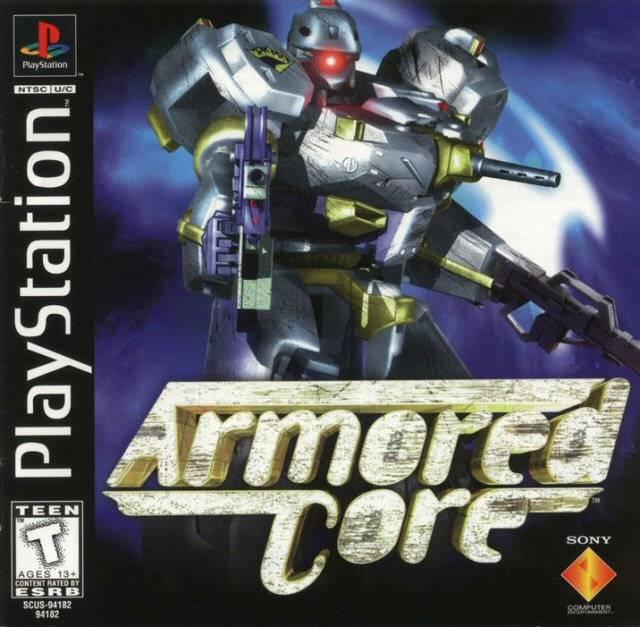
Armored Core
1997
The sourced concerns are substantially offset by delivered value.
What counts as a cash grab?
Commercial extraction prioritized over meaningful consumer or creative value. Profit, popularity, adaptations, sequels, remakes, high budgets, and normal marketing do not count by themselves.
Why?
Armored Core (1997) for PlayStation shows no credible evidence of being a cash grab. Contemporary reviews and official histories describe it as a deep mech action game with extensive customization, about 46 missions, and over 100 parts, and there is no reporting of predatory monetization, deceptive release practices, or a concrete price/value mismatch for the original retail release. Early follow-ups such as Project Phantasma were presented as substantive expansions with import features and arena modes rather than stripped or deceptive add-ons.
- Contemporary reviews praise deep customization and mission variety, indicating substantive gameplay value.
- Official retrospectives and credits note designer involvement and substantial development work.
- No sources document microtransactions, predatory monetization, or deceptive release practices for the 1997 retail release.
View full breakdownHide full breakdown
- Expansions like Project Phantasma added modes and allowed save import, suggesting consumer-friendly follow-ups rather than exploitative reuse.
Score factors
| Direction | Factor | Evidence | Impact |
|---|---|---|---|
| For | Exploitative monetization not found | No credible sources document microtransactions, DLC economics, or predatory monetization for the original 1997 PlayStation release.[2] | +23 |
| Against | Substantive new content and systems | The game offered extensive customization, with over 100 parts and dozens of missions, a core feature highlighted by reviewers as central to its player value.[1] | -18 |
| For | No reported price/value mismatch | Contemporary reviews did not report deceptive pricing or a concrete mismatch between retail price and delivered gameplay value for the original release.[1] | +15 |
| Against | Notable production craft | Official histories and coverage note FromSoftware development and collaboration with designer Shoji Kawamori, and contemporaneous reviews praise the complex mechanics and mission design.[2][1] | -14 |
| Against | Expansions added consumer-friendly features | Project Phantasma and Master of Arena were released as immediate expansions with new modes and save-import features, and reviewers described them as substantive additions rather than minimal cash-focused reissues.[3] | -9 |
Confidence: High · Multiple reputable contemporaneous reviews and an official PlayStation blog history consistently describe substantive gameplay features and expansions, and there is no documented evidence of exploitative monetization for the 1997 retail release, though archival internal financial records are not pub · Researched 2026-09-30
Sources reviewed
- [1]www.gamespot.com
- [2]blog.playstation.com
- [3]www.gamespot.com
- [4]www.gamespot.com
- [5]www.gamespot.com
- [6]www.gamespot.com
- [7]gamefaqs.gamespot.com
- [8]gamefaqs.gamespot.com
- [9]www.gamespot.com
- [10]www.gamespot.com
View 8 more sourcesShow fewer sources
What does the community think?
The AI sees low cash-grab risk. What's your read?
Loading community verdict…